21 Long Layered Haircuts for Every Hair Type
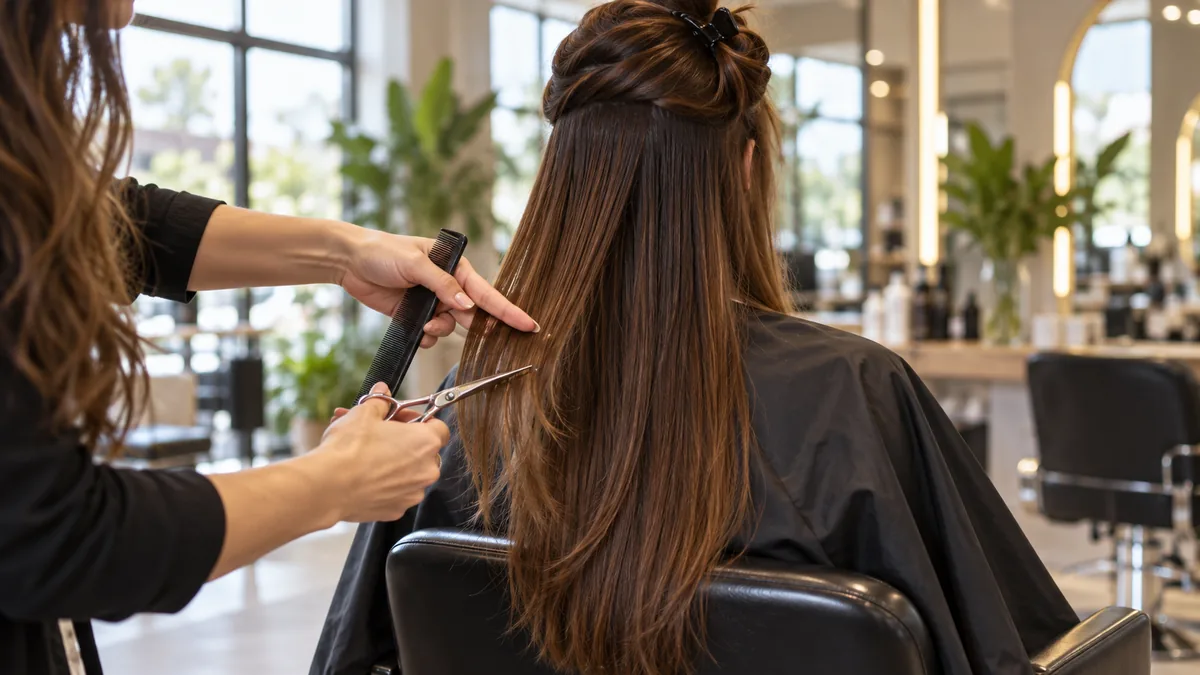
Long layered haircuts are a hugely popular salon request for a simple reason. They let you keep your length while changing everything about how your hair moves, frames your face, and behaves on a daily basis. One appointment can take hair from heavy and shapeless to light and intentional, without losing the inches you spent years growing.
Below are 21 long layered haircuts grouped by goal, so you can compare similar cuts side by side: face-framing layers and bangs, layers matched to your hair texture, volume styles, statement shapes like the butterfly, the hime and the V-cut, and bold details like a money piece or a hidden undercut. For each cut you will find who it tends to flatter, the textures it works with, the styling effort, the trim schedule, and one sentence to take to your stylist.
One honest note before you start: layers are a technique, not a single haircut. Two stylists can hear “long layers” and cut two very different things, which is why every idea below includes the exact words to ask for. Bring two or three photos of the layer placement you like. A good stylist would rather see the picture than guess from a description.
Face-Framing Layers and Bangs
These are the long layered haircuts most people picture first, plus the fringe options that pair with them. The layering stays concentrated around the face, so the back keeps its fullness while the front gets all the movement and shape.
Classic Long Layers

The baseline everything else is measured against. Layers start around the collarbone and blend down through the ends, so the hair keeps a solid perimeter but moves when you do. If this is your first long layers haircut, start here: it changes the feel of the hair without changing the silhouette much.
- Who it suits: Genuinely adaptable. Long faces benefit from the added width at the sides, and round faces benefit when the shortest layer starts below the chin rather than at the cheek.
- Hair texture: Straight to wavy, fine to thick. The most forgiving of all long layered haircuts across textures.
- Styling difficulty: Easy. Air-dries neatly on straight hair; wavy hair needs only a little cream to define the layers.
- Maintenance: Every 10 to 12 weeks. Layers this long grow out softly.
- What to ask your stylist: “Long layers starting at my collarbone, blended through the ends, keeping a full perimeter.”
Soft Face-Framing Layers

Shorter pieces cut around the face, usually from the cheekbones down, while the back stays long and mostly one length. It gives the effect people want from bangs, brightness around the face, without committing to a fringe.
- Who it suits: Excellent for square faces, since the curved pieces soften the jawline. On heart-shaped faces, keep the shortest piece at chin level or below so the chin does not look narrower.
- Hair texture: Straight to wavy shows the framing best. Curly hair can wear it if the pieces are cut dry to account for shrinkage.
- Styling difficulty: Easy to moderate. A round brush or a quick bend with a flat iron makes the framing pieces curve inward.
- Maintenance: Face-framing pieces every 6 to 8 weeks; the lengths every 10 to 12.
- What to ask your stylist: “Face-framing layers starting at my cheekbones, blended into the lengths, back kept mostly one length.”
Tip: If you tie your hair up often, ask for the framing pieces to be long enough to tuck behind your ears. Too short and they fall out of every ponytail.
Curtain Bangs with Long Layers

Curtain bangs part in the middle and sweep to each side, melting straight into the face-framing layers. Paired with long lengths, this has been a hugely popular choice among long layered haircuts in recent years, and it earns it: the grow-out is painless because the bangs simply become layers.
- Who it suits: Very adaptable. Long foreheads get coverage without a heavy fringe, and the center part suits oval and round faces when the bangs are kept below the cheekbones.
- Hair texture: Straight to wavy. Strong cowlicks at the front hairline can fight a center part, so mention yours at the consultation.
- Styling difficulty: Moderate. The bangs need about two minutes with a blow-dryer and a round brush, directed away from the face.
- Maintenance: Bangs every 4 to 6 weeks; lengths every 10 to 12.
- What to ask your stylist: “Curtain bangs starting at my cheekbones, blending into long layers, with a center part.”
Long Layers with Blunt Bangs

A full, straight-across fringe at brow level on top of long layered lengths. The bangs give the face a strong frame, and the layers stop the overall look from feeling heavy. Of all the fringe options for long layered haircuts, it is the most graphic and reads instantly in a photo.
- Who it suits: Oval and heart-shaped faces, and long faces especially, since the horizontal line visually shortens the face. Round faces do better with the bangs slightly longer and softened at the edges.
- Hair texture: Straight to slightly wavy hair. Strong cowlicks at the front hairline make blunt bangs hard to control.
- Styling difficulty: Moderate. Blow-dry the bangs flat while they are still wet, with a flat brush, about 3 minutes.
- Maintenance: Bangs every 3 to 4 weeks; lengths every 10 to 12. Many salons offer quick bang trims between appointments.
- What to ask your stylist: “Full blunt bangs that sit just at my eyebrows, with long layers starting at my collarbone. Keep the bangs thick, not wispy.”
Tip: Ask for the bangs a touch longer than you want on the day. They spring up as they dry, especially after washing.
Long Layers with Side-Swept Bangs
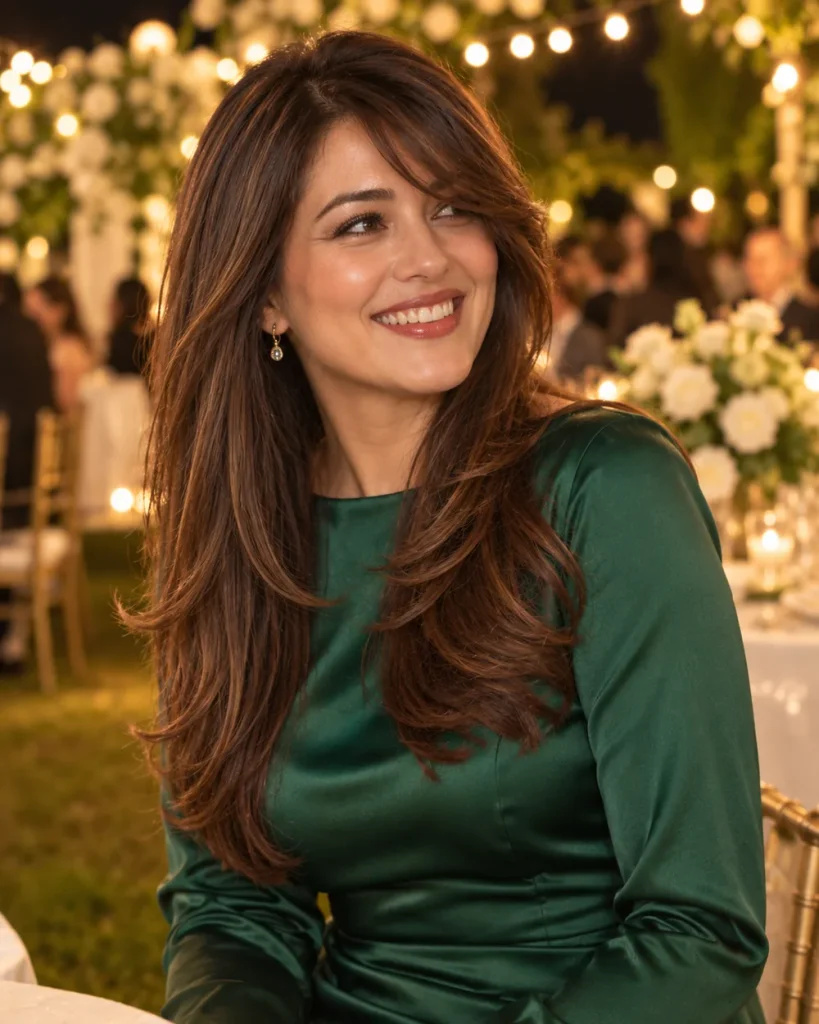
A longer fringe cut on an angle so it sweeps across the forehead to one side and blends into the layers. It is softer and lower-commitment than full bangs, and it is also the kindest way to grow out an old fringe.
- Who it suits: Round and square faces, since the diagonal line breaks up width and softens a strong jaw. It is also a good choice for high foreheads.
- Hair texture: Straight to wavy. It works on fine hair because the swept piece adds the look of volume at the front.
- Styling difficulty: Easy. Blow-dry the fringe across in the direction it falls, or pin it back on lazy days.
- Maintenance: Fringe every 5 to 6 weeks; lengths every 10 to 12.
- What to ask your stylist: “Side-swept bangs cut on an angle, shortest at my brow and longest at my cheekbone, falling to one side and blended into long layers.” Then show which side.
Bottleneck Bangs with Long Layers
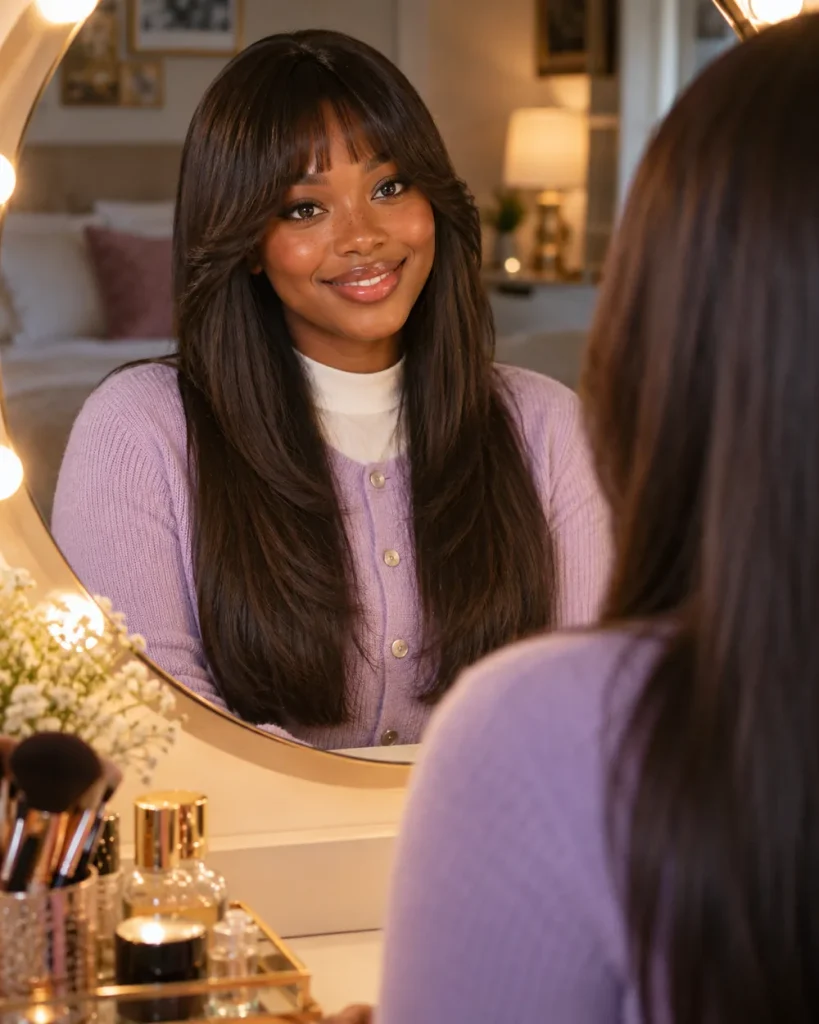
Bangs that are short and narrow at the center of the forehead, then lengthen and widen toward the cheekbones, shaped like a bottle’s neck, flowing into long layers. More structured than curtain bangs, softer than a blunt fringe.
- Who it suits: The shape draws attention to the eyes and cheekbones, flattering oval and heart-shaped faces. Wide foreheads get balanced coverage.
- Hair texture: Straight to wavy. The precise shape needs hair that sits relatively smooth.
- Styling difficulty: Moderate. A quick blow-dry with a small round brush sets the bottleneck curve.
- Maintenance: Bangs every 4 to 6 weeks; lengths every 10 to 12.
- What to ask your stylist: “Bottleneck bangs, short and narrow at the center of my forehead, getting longer and wider toward my cheekbones, blending into long layers.”
Long Layered Haircuts by Hair Texture
The same word, “layers,” means different things on different textures. A layered haircut for long hair that is curly needs almost the opposite approach from one on straight hair. These long layered haircuts are matched to what your hair actually does, so the cut works with the texture instead of against it. If your hair is straight and very fine or very thick, the FAQ at the end covers exactly what to ask for.
Long Layers for Curly Hair
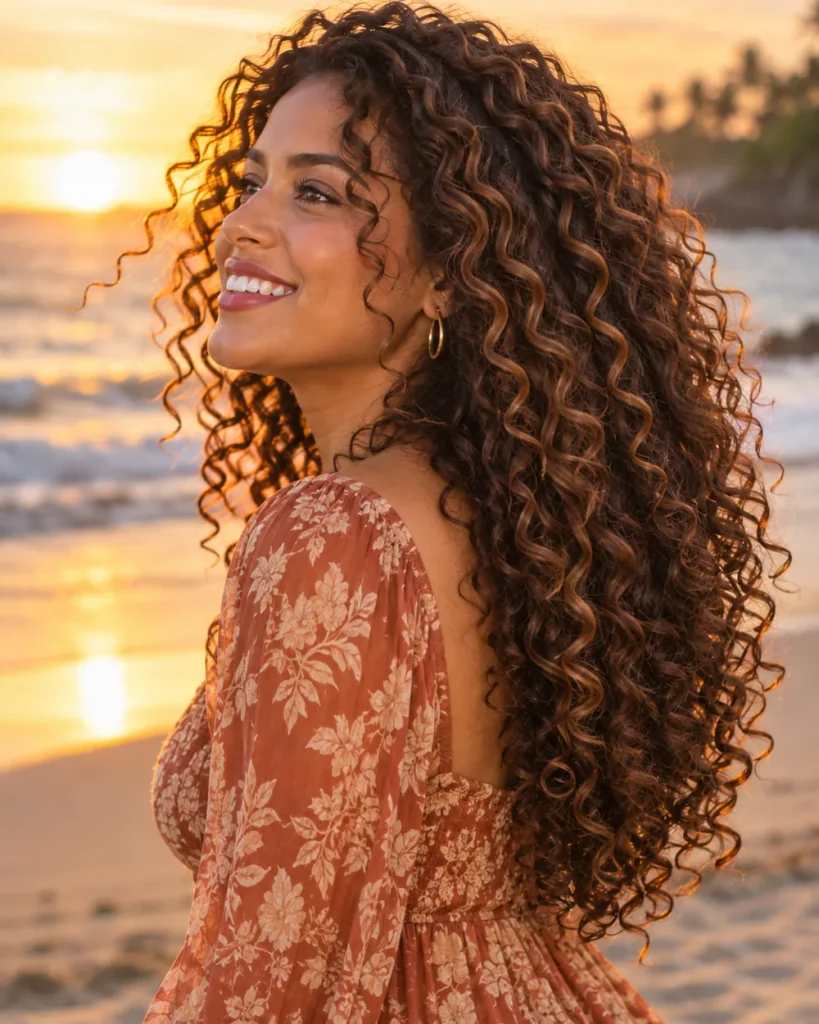
Curls need layers more than any other texture, but cut the wrong way they collapse into a triangle. Long layers on curly hair should be cut dry or curl by curl, shaping a rounded silhouette with the weight distributed evenly.
- Who it suits: With the shape adjusted, most face shapes. More volume on top lengthens a round face; more volume at the sides balances a long face.
- Hair texture: Curly hair, roughly 2C to 3C patterns. These long layered haircuts only work when the stylist cuts for the curl pattern, not against it. Wavy and coily hair have their own ideas right after this one.
- Styling difficulty: Easy once the routine is set: leave-in and curl cream on soaking wet hair, then diffuse or air-dry.
- Maintenance: Every 12 to 16 weeks. Curls hide growth better than straight or wavy hair.
- What to ask your stylist: “Long layers cut dry, curl by curl, in a rounded shape. No triangle.” Look for a stylist who cuts curls regularly.
Tip: Book the cut when your hair is in its normal wash-day state, not freshly straightened. The stylist needs to see the real curl pattern.
Long Layers for Wavy Hair
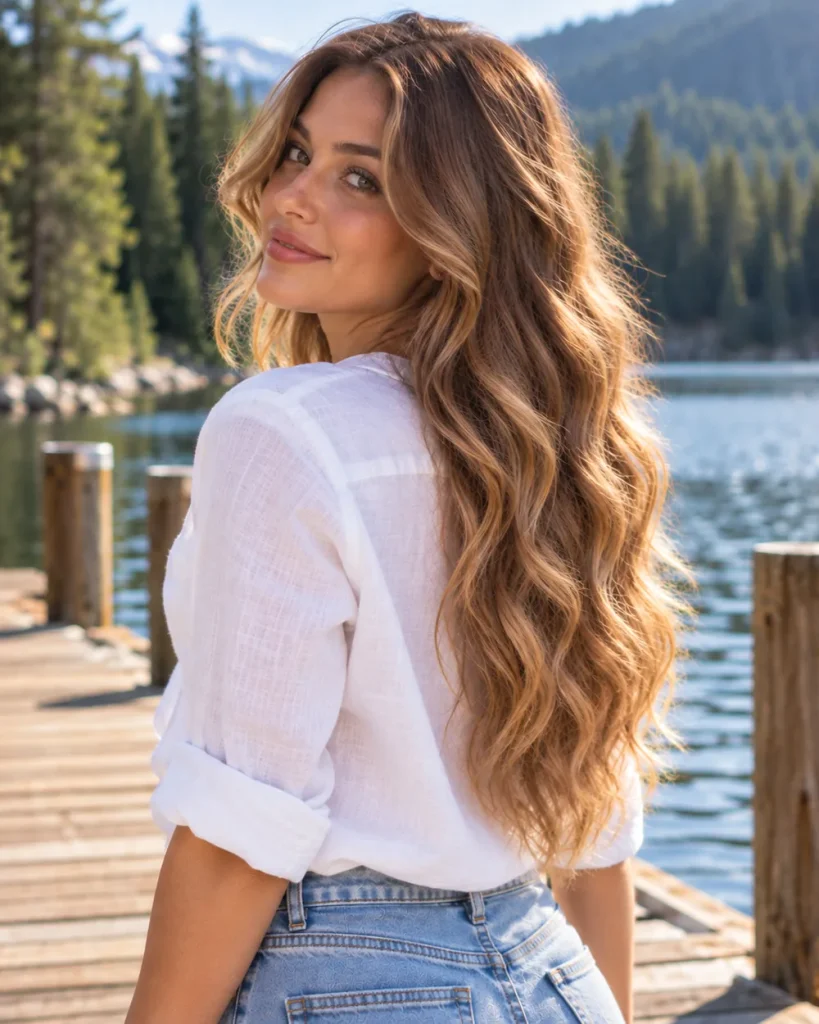
Waves and layers are natural partners. Long layers encourage the wave pattern instead of dragging it straight, which is why wavy hair often looks better with layers than without. The result is that beachy movement people try to fake with irons.
- Who it suits: Very forgiving. The waves soften angular features on square faces and add width where long faces need it.
- Hair texture: Natural waves, or straight hair that holds a bend. Long layered haircuts like this one are the lowest-effort way to get lived-in texture.
- Styling difficulty: Easy. Scrunch in mousse or salt spray and air-dry, about 5 minutes.
- Maintenance: Every 10 to 12 weeks.
- What to ask your stylist: “Long layers that follow and encourage my natural wave, with the shortest layer no higher than my chin.”
Long Layers for Coily Hair
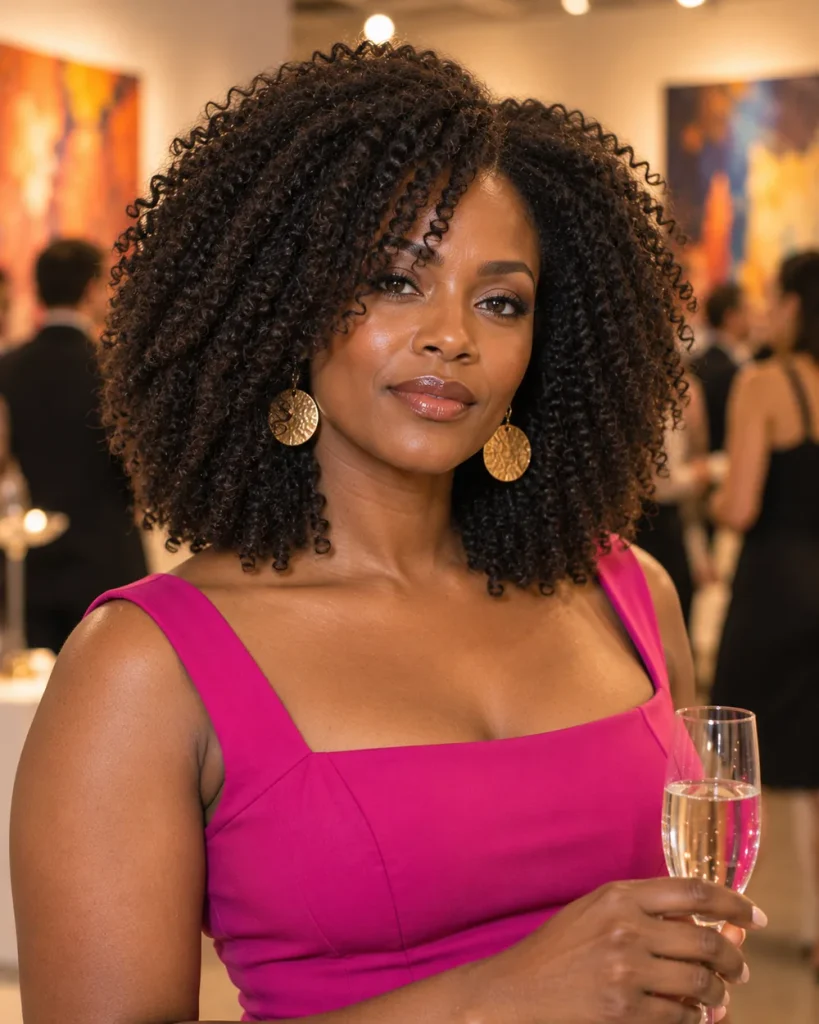
Coily hair shrinks, sometimes dramatically, so long layers here are about shape and weight distribution rather than visible layer lines. Done well, the cut forms a full, rounded silhouette with room for the coils to spring.
- Who it suits: The shape can be tailored widely. Discuss with your stylist whether you want height on top, width at the sides, or an even halo.
- Hair texture: Coily and tight curl patterns. Shrinkage must be factored into every cut decision.
- Styling difficulty: Moderate. Twist-outs or braid-outs define the shape; wash-and-go works once the cut is right.
- Maintenance: Every 12 to 16 weeks, with trims shaped to the coil pattern.
- What to ask your stylist: “A shaped long layered cut that accounts for shrinkage. I want a rounded silhouette with even weight.” Bring photos of the shape on your hair type specifically.
Volume and Retro Layers
Some long layered haircuts are built for bounce. These two borrow from the 1970s and the 1990s, and both are cut so the hair holds its shape when you style it.
Feathered 70s Layers
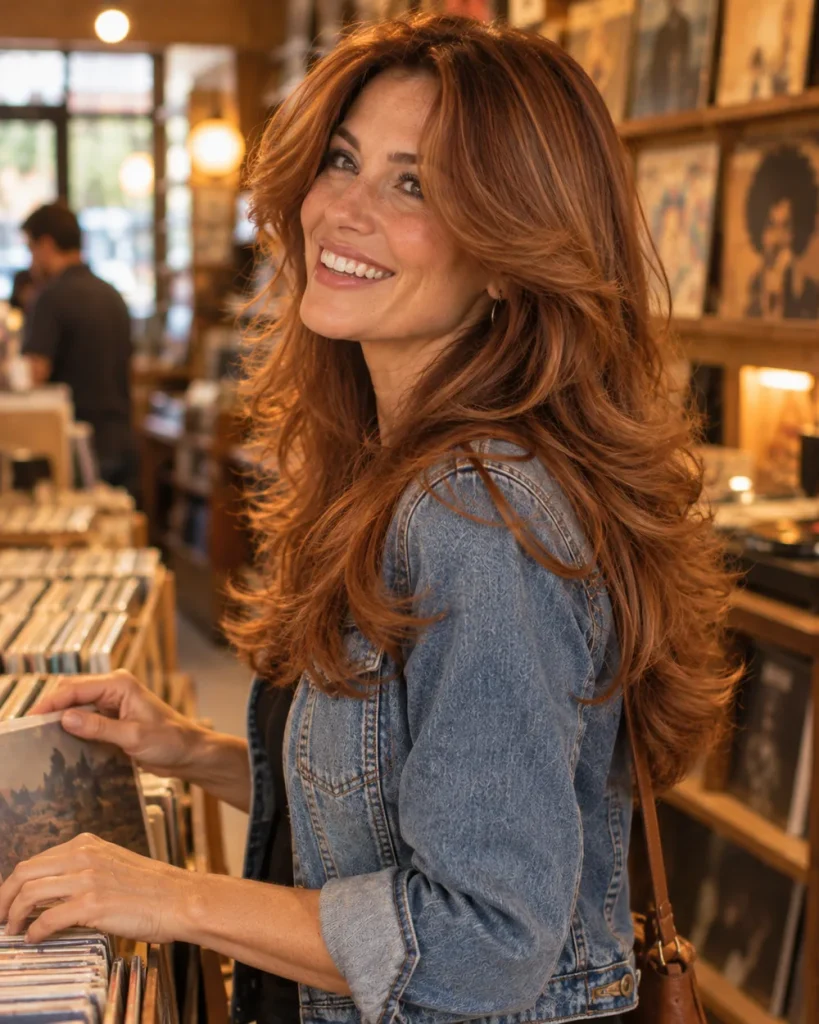
The throwback cut: layers flipped outward at the ends for that bouncy, Farrah-inspired movement. Modern versions keep the flipping softer and the perimeter fuller, so it reads fresh rather than costume.
- Who it suits: The outward flip adds width at the sides, which flatters long and oval faces. Round faces should keep the volume lower, near the shoulders rather than the cheeks.
- Hair texture: Medium to thick straight or wavy hair holds the flip. Very fine hair can struggle to keep the flick all day.
- Styling difficulty: Moderate. The flip comes from a round brush turned outward, about 10 minutes.
- Maintenance: Every 8 to 10 weeks to keep the flipped shape crisp.
- What to ask your stylist: “Long layers with the ends textured to flip outward, soft 70s movement, not a harsh flick.”
Watch out: This cut lives or dies by the blow-dry. If you never heat style, tell your stylist and ask for a version that air-dries into soft waves instead.
90s Blowout Layers
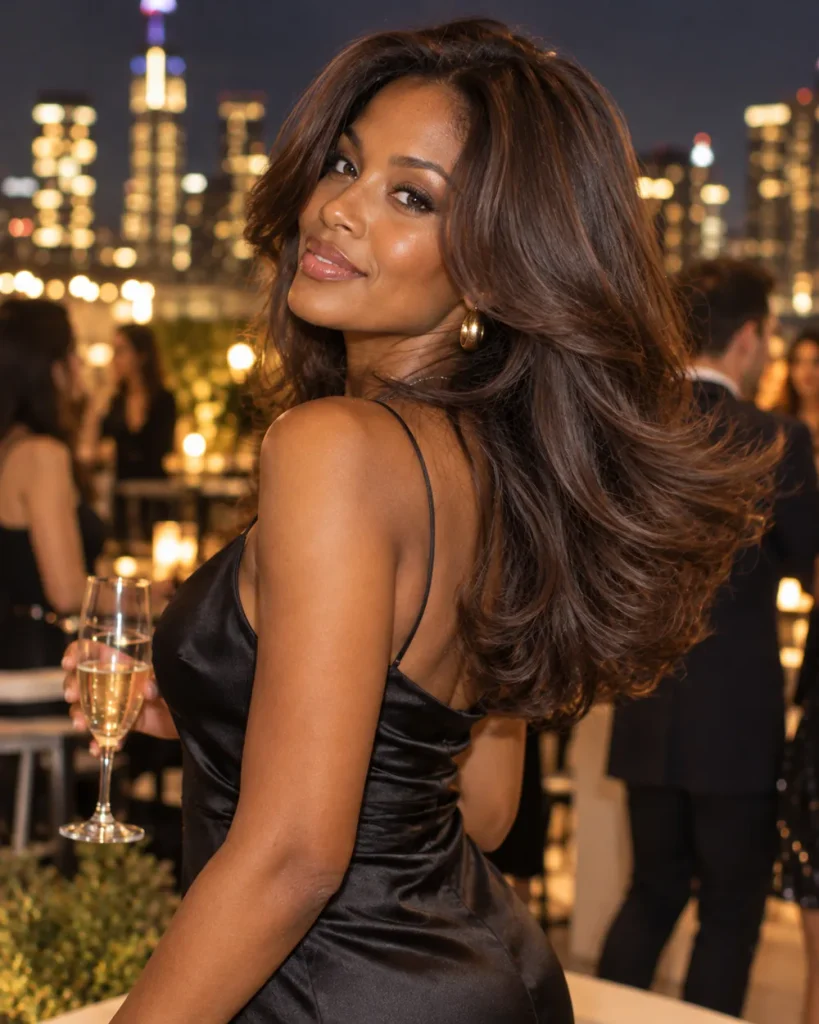
Big, bouncy, round-brush volume: long layers cut so the ends curl under and the face pieces roll away from the face. It is the supermodel look of the 1990s, and the layering is what makes that volume possible.
- Who it suits: Long and oval faces carry the width beautifully. Round faces should keep the biggest volume below the chin.
- Hair texture: Medium to thick straight or wavy hair holds the bounce. Fine hair can get there with hot rollers and a strong mousse.
- Styling difficulty: Involved. A round-brush blowout or large self-grip rollers, 20 to 30 minutes. This is the highest-effort style on the list.
- Maintenance: Every 8 to 10 weeks.
- What to ask your stylist: “Long layers with lots of movement for a bouncy blowout, face-framing layers starting at my chin, and ends that curl under easily.”
Watch out: Without the blowout, this cut air-dries as ordinary layers. Choose it only if you enjoy styling your hair.
Statement Shapes
These long layered haircuts make the layering the star. Each has a distinct silhouette, which means each photographs differently and grows out differently. If you ever doubted that long layered haircuts can look completely different from one another, this group is the proof. Read the grow-out notes before you commit.
The Butterfly Cut
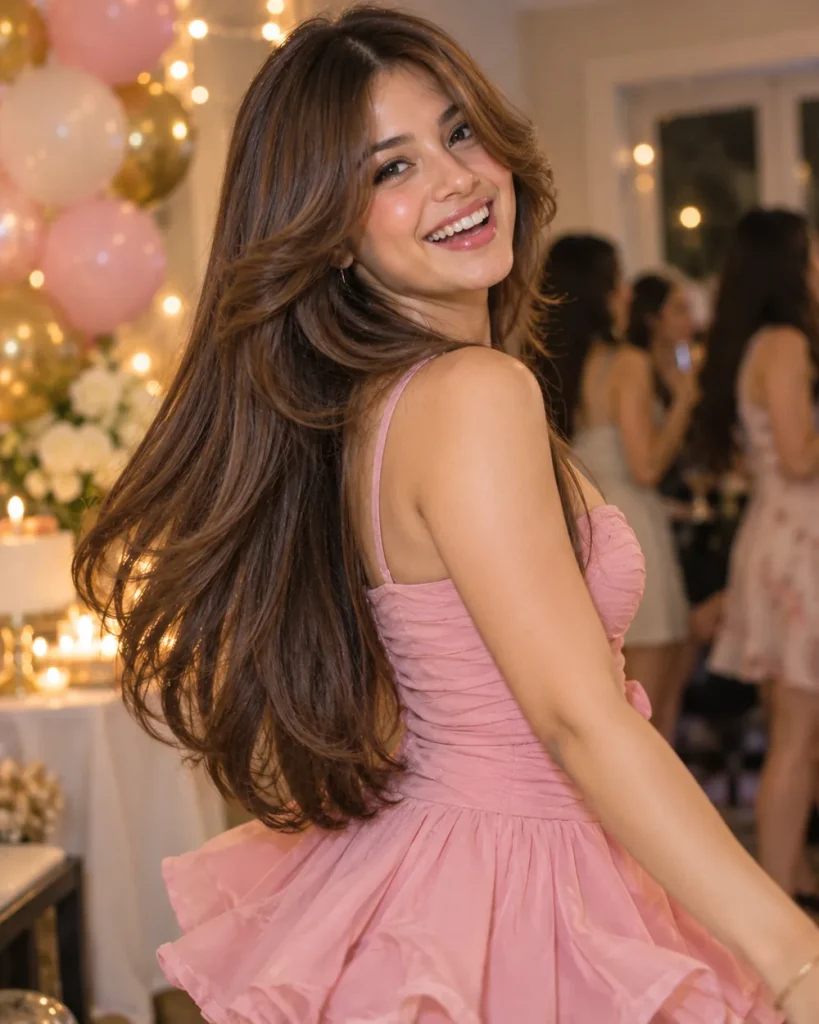
Short, bouncy layers around the face that mimic butterfly wings, with the back left long. It gives the volume and movement of a short haircut around the face while the length stays untouched behind. Among long layered haircuts, it is a favorite inspiration photo to bring to the salon.
- Who it suits: The face-framing volume flatters oval and long faces especially. Round faces should keep the shortest layer below the chin to avoid adding width at the cheeks.
- Hair texture: Medium to thick straight or wavy hair gives the wings their lift. Fine hair can wear a softer version with fewer, longer pieces.
- Styling difficulty: Moderate. The signature bouncy blowout takes 10 to 15 minutes with a round brush.
- Maintenance: Every 8 to 10 weeks. The short front pieces lose their shape faster than the back.
- What to ask your stylist: “A butterfly cut: short layers around the face starting at my chin, long lengths in the back, lots of bounce.”
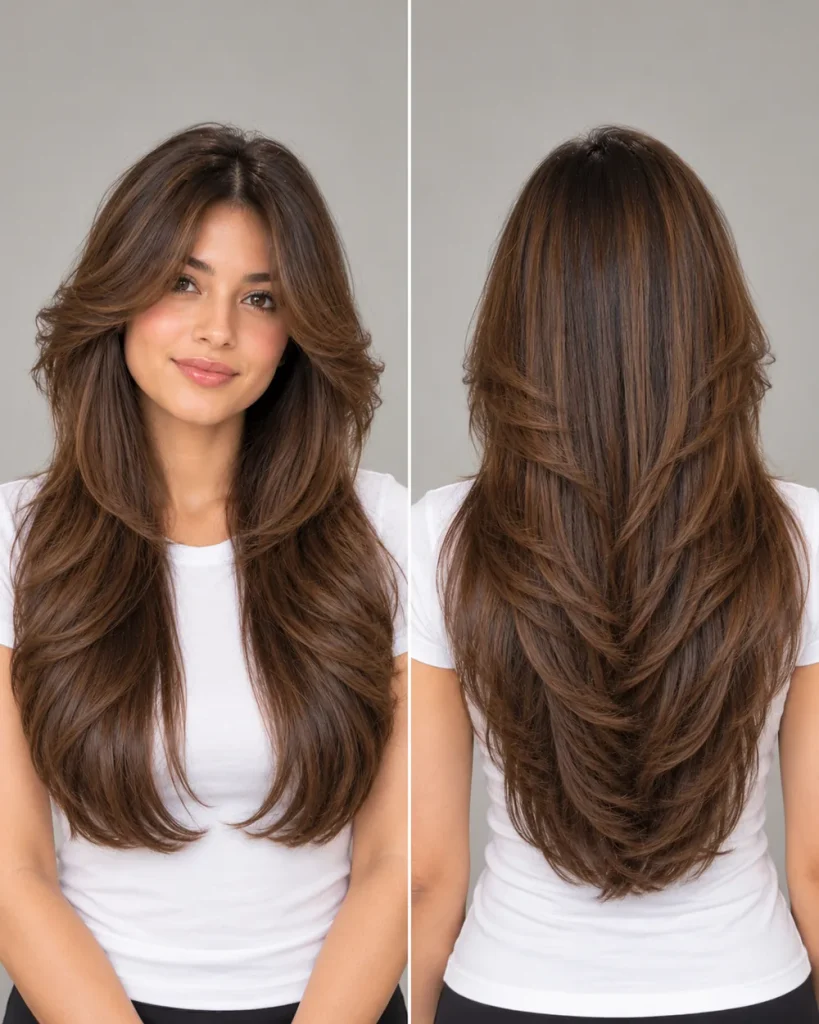
Show your stylist: front view (left) and back view (right) of the same butterfly cut.
Grow-out path: The front pieces grow into standard face-framing layers within a few months, so this cut has one of the easiest grow-outs on the list.
V-Cut Layers
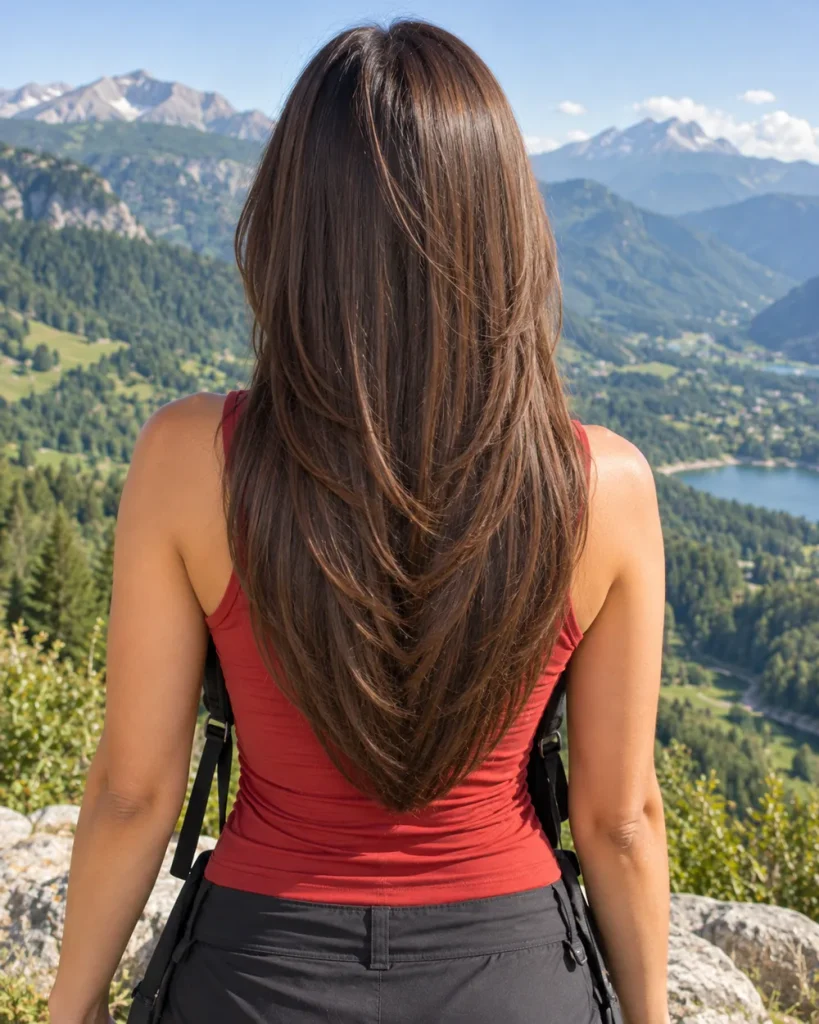
The perimeter comes to a soft point at the center back, forming a V. Layers cascade toward the point, which makes the hair look longer and thicker from behind. It is dramatic from the back and simple from the front.
- Who it suits: The V draws the eye downward and adds a sense of length, which helps balance round and square faces. From the front it behaves like classic layers.
- Hair texture: Medium to thick hair shows the V best. On very fine hair the point can look sparse.
- Styling difficulty: Easy to moderate. Straight styling shows the shape; waves soften it.
- Maintenance: Every 10 to 12 weeks to keep the point defined.
- What to ask your stylist: “A V-cut perimeter with long layers cascading toward the point. Soft point, not a sharp tail.”
Watch out: The V needs length to read properly. Above bra-strap length it can look accidental rather than intentional.
U-Cut Layers

The gentler sibling of the V: the perimeter curves in a soft U, rounded rather than pointed. It gives fullness at the bottom and a smooth, polished outline from every angle.
- Who it suits: Universally flattering and the safest shaped perimeter among long layered haircuts. The rounded bottom softens square jawlines when worn forward.
- Hair texture: All textures. Fine hair especially benefits because the U keeps the perimeter looking full.
- Styling difficulty: Easy. The shape does the work.
- Maintenance: Every 10 to 12 weeks.
- What to ask your stylist: “A U-shaped perimeter with long blended layers, rounded bottom, keeping it full.”
The Hush Cut

A soft, wispy take on layers with feathery ends and often a light fringe. The whole cut whispers rather than shouts. Among long layered haircuts, this is the one for people who want texture without any harsh lines.
- Who it suits: The softness flatters angular features, making it a lovely pick for square and heart-shaped faces.
- Hair texture: Fine to medium straight or wavy hair. Thick hair needs the wispy ends thinned carefully or they puff.
- Styling difficulty: Easy. Air-dries well; the wispy ends are meant to look undone.
- Maintenance: Every 8 to 10 weeks, since wispy ends show damage first.
- What to ask your stylist: “A hush cut: soft wispy layers through the ends, feathery texture, nothing blunt or harsh.”
Long Wolf Cut

Short choppy layers at the crown melting into long lengths: the mullet’s cooler descendant. It is one of the highest-contrast cuts on this list, with deliberate disconnection between the top and the bottom.
- Who it suits: The crown volume suits oval and long faces. It is a statement cut, so face-shape rules matter less than personal style here.
- Hair texture: Wavy and thick hair carry the texture best. Very straight fine hair can look stringy without styling effort.
- Styling difficulty: Moderate. Texture spray and some rough-drying bring out the choppiness.
- Maintenance: Every 6 to 8 weeks. The disconnected shape grows out awkwardly if neglected.
- What to ask your stylist: “A long wolf cut: short choppy layers at the crown blending into long lengths, textured and piecey.”
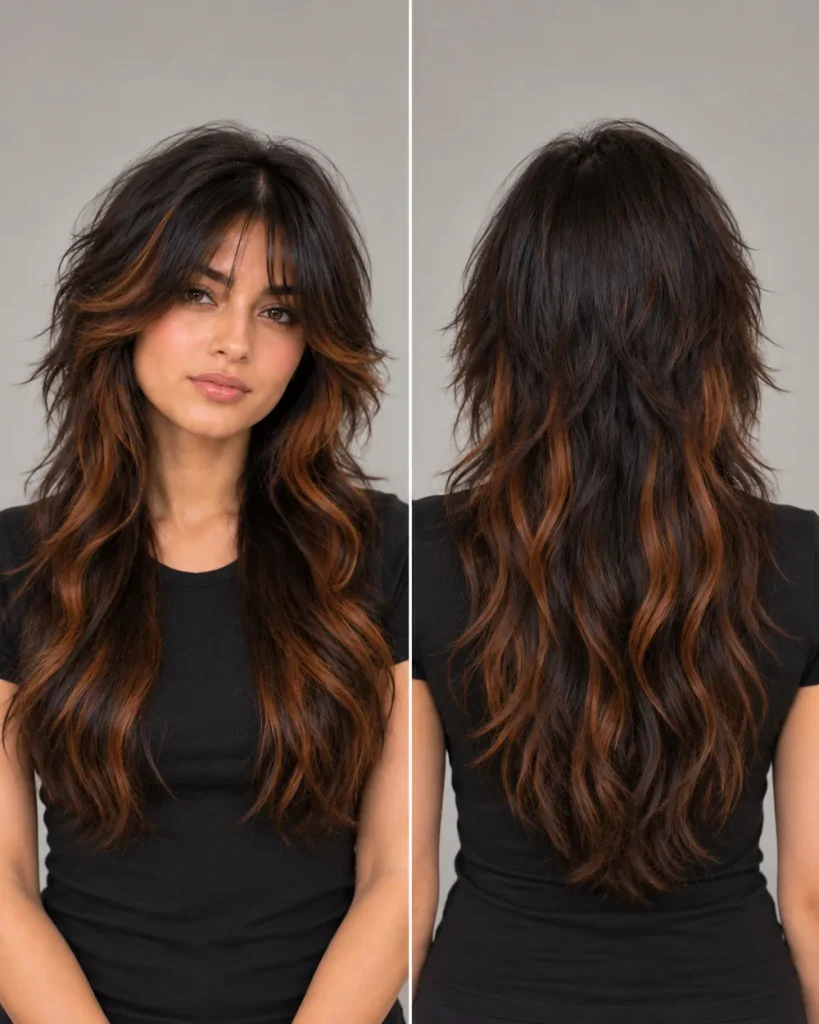
Show your stylist: front view (left) and back view (right). Note how short the crown layers are compared with the lengths.
Watch out: This is one of the hardest grow-outs on the list. The short crown takes a year or more to catch up. Commit only if you love the grow-out journey too.
Long Shaggy Layers

All-over texture with choppy ends and piecey movement, less extreme than the wolf cut. Think rock-and-roll softness: undone, touchable, and better on day two than day one.
- Who it suits: The texture around the face softens strong features, good for square faces. Long faces get welcome width from the piecey sides.
- Hair texture: Wavy to thick hair is ideal. Straight hair needs product to keep the texture visible.
- Styling difficulty: Easy to moderate. Air-dry with texture spray, or rough-dry for more piece definition.
- Maintenance: Every 8 to 10 weeks.
- What to ask your stylist: “Long shaggy layers with choppy textured ends, piecey movement, lived-in finish.”
The Hime Cut

A Japanese cut with three clear parts: blunt straight bangs, blunt side pieces called sidelocks, cut anywhere from the cheekbones to the chin, and long one-length hair behind. The sharp contrast between the sections is the whole point. Among long layered haircuts, the sidelocks show layering in its most structured form.
- Who it suits: Oval and long faces. The sidelocks frame the face, so they also soften a square jaw. Round faces should keep the sidelocks at chin length or a little longer, rather than at the cheekbones.
- Hair texture: Straight, smooth hair only. The clean lines disappear on waves and curls.
- Styling difficulty: Moderate. A flat iron keeps the sidelocks crisp, about 10 minutes.
- Maintenance: Every 4 to 6 weeks. The sidelocks lose their sharp line quickly.
- What to ask your stylist: “A hime cut: blunt bangs at my brows, blunt sidelocks at chin length, and the back left long and one length.”
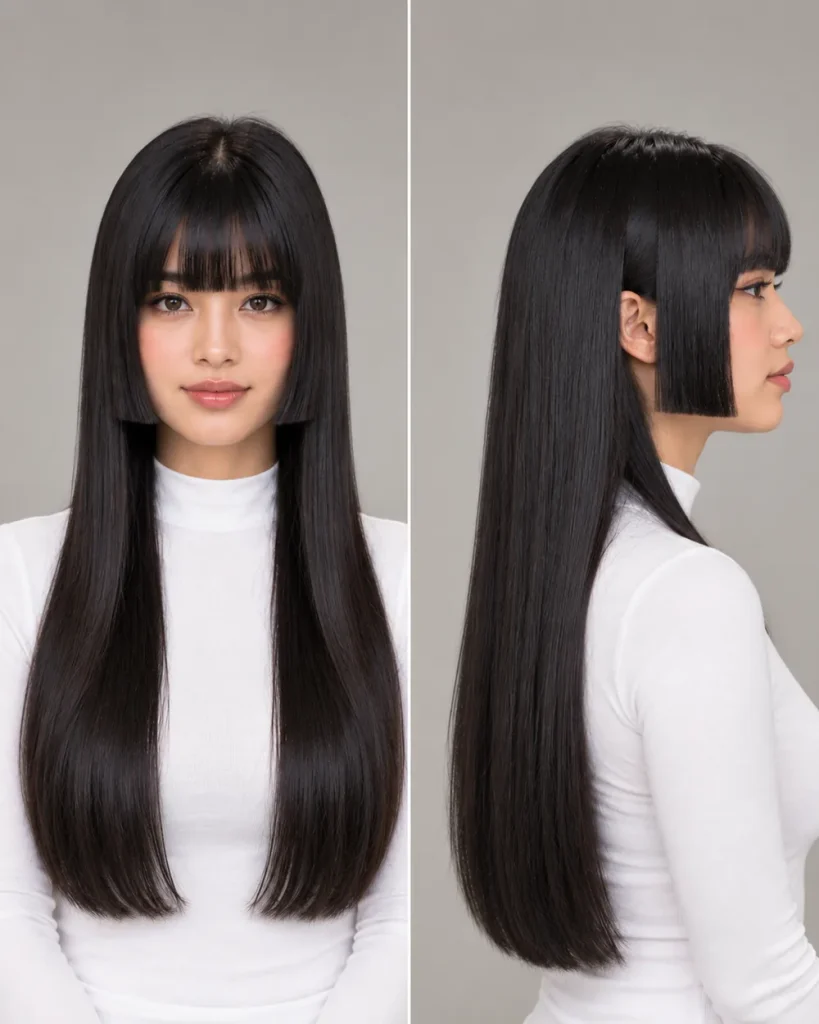
Show your stylist: front view (left) and side view (right). The side view shows the clean step between the sidelocks and the long hair.
Grow-out path: The sidelocks grow into face-framing layers within a few months, so it is less of a commitment than it looks.
The Jellyfish Cut

A short, blunt bob sits on top, like a jellyfish’s bell, with long, sleek lengths hanging underneath. The two tiers are completely disconnected. It is the most experimental cut on this list.
- Who it suits: Oval faces, and anyone who treats hair as a fashion statement. Here, confidence matters more than face-shape rules.
- Hair texture: Straight, thick hair shows the two tiers best. Waves blur the line between them.
- Styling difficulty: Moderate. Flat-iron the top tier smooth so the bob line reads clearly, about 10 minutes.
- Maintenance: Every 5 to 6 weeks to keep the bob tier sharp.
- What to ask your stylist: “A jellyfish cut: a blunt chin-length bob layer on top, disconnected from the long lengths underneath, with both tiers cut blunt.”
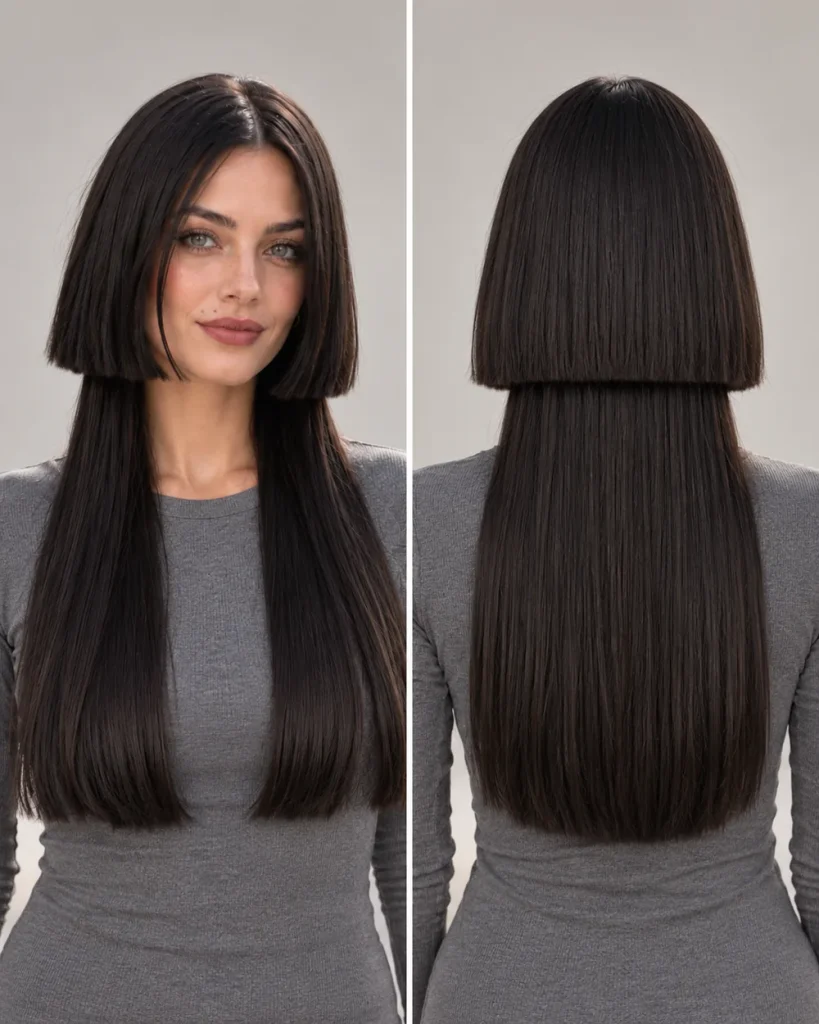
Show your stylist: front view (left) and back view (right). The top tier sits as one straight line across the back.
Watch out: The grow-out is long, since the top tier needs a year or more to blend in. For a softer first try, ask for the top tier at collarbone length.
Bold Details: Color and Undercuts
The last two long layered haircuts add one bold detail to classic long layers: a bright money piece at the front, or a shaved section hidden underneath.
Money Piece Face-Framing Layers

Face-framing layers paired with bright, lighter color on the two front sections, known as the money piece. The color shows off exactly where the layers fall and lights up the face, even when the rest of the hair stays dark.
- Who it suits: Every face shape, because the brightness pulls attention to the eyes and cheekbones. Round faces should keep the lightest pieces below the chin.
- Hair texture: All textures. On curls, the lighter pieces make the face-framing spirals stand out.
- Styling difficulty: Easy. A quick round-brush pass on the front pieces, or simply air-dry.
- Maintenance: Cut every 8 to 10 weeks; the color needs a root touch-up every 8 to 12 weeks.
- What to ask your stylist: “Face-framing layers starting at my cheekbones, with a money piece: the two front sections lifted two to three shades lighter than the rest.” Book the cut and color together so the color sits on the layers.
Long Layers with a Hidden Undercut
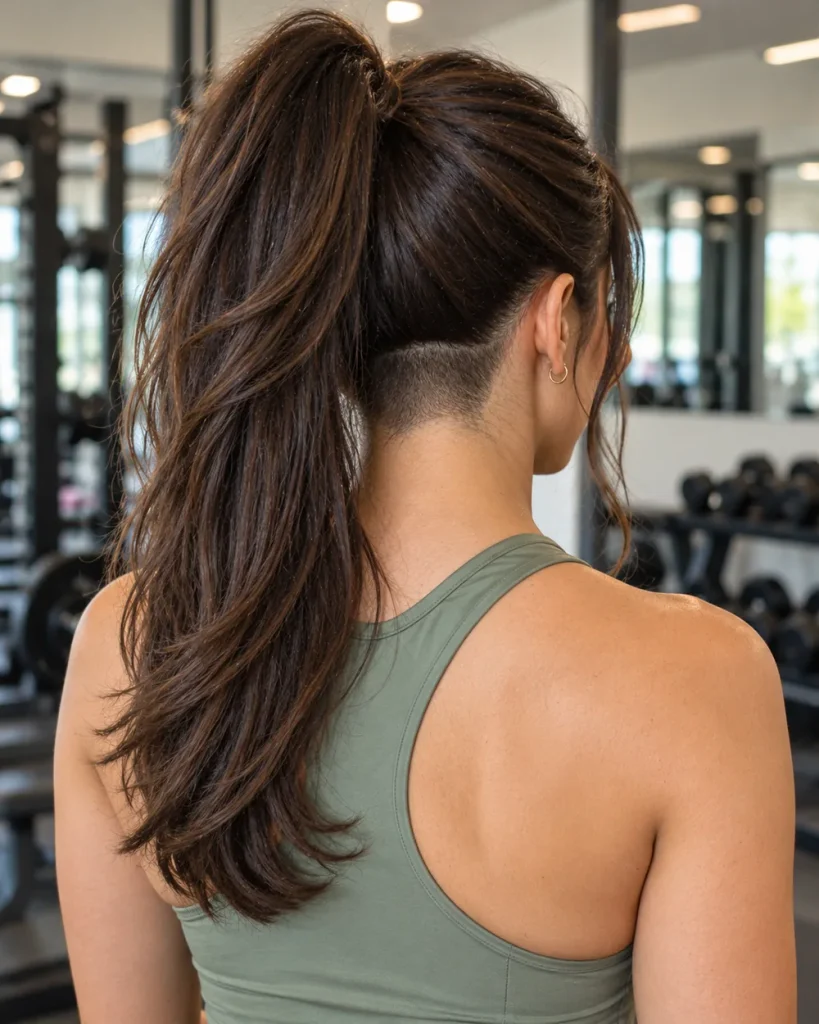
Long layers on top with a small section shaved underneath at the nape or behind one ear. Worn down, nobody sees it. Worn up, the shaved section shows. Of all the long layered haircuts here, it takes the most bulk out of very thick hair.
- Who it suits: Any face shape, since it stays hidden when your hair is down. A smart pick for thick hair and hot summers.
- Hair texture: Thick hair benefits most. Fine hair should keep the undercut small, or the remaining hair can feel thin.
- Styling difficulty: Easy when worn down. Wear a high ponytail or a half-up style to show the undercut.
- Maintenance: Undercut every 2 to 3 weeks to stay crisp; lengths every 10 to 12.
- What to ask your stylist: “Long layers on top with a small nape undercut, clippered at a number 2, fully hidden when my hair is down.”
Grow-out path: The undercut grows back underneath while the long hair covers it, which makes this one of the easiest bold choices to undo.
Quick Comparison: V-Cut vs U-Cut vs Butterfly vs Classic
| Cut | Shape at the back | Best for | Styling effort | Grow-out |
|---|---|---|---|---|
| Classic long layers | Even, full perimeter | First-time layers, all textures | Easy | Softest |
| Butterfly cut | Long back, short front | Volume around the face | Moderate | Easy, front becomes framing |
| V-cut layers | Pointed at center back | Drama, thicker look from behind | Easy to moderate | Needs reshaping |
| U-cut layers | Rounded | Fullness, fine hair | Easy | Soft |
Mistakes to Avoid with Long Layered Haircuts
Cutting the front too short. A very common regret. Layers that start above the cheekbone on long hair can read mullet-like as they grow. When in doubt, start longer. You can always go shorter next time.
Over-layering fine hair. Too many layers on fine hair remove the very density you are trying to keep. If your hair is fine, ask for internal or minimal layering and a solid perimeter instead.
Skipping the photo. “Long layers” means different things to different stylists. With long layered haircuts, the consultation photo is not optional. It is the appointment.
Cutting curls wet and even. On curly and coily hair, wet cutting without accounting for shrinkage is how layers end up three inches shorter than planned. Dry or stretched cutting exists for a reason.
Frequently Asked Questions
How do I know if long layered haircuts will suit me?
Almost everyone can wear layers; what changes is where they start. A good layered haircut for long hair is planned around your texture: fine hair needs invisible internal layers, thick hair needs weight removed. Round faces suit the shortest layer below the chin, long faces suit width at the sides.
What is the difference between V-cut and U-cut layers?
Both shape the perimeter at the back. The V-cut comes to a soft point at the center, which makes hair look longer and thicker from behind but needs length to read well. The U-cut curves in a rounded shape, which keeps the perimeter looking full and is more forgiving on fine hair. If you cannot decide, the U-cut is the safer first choice.
Will layers make my thin hair look thinner?
Only if they are cut wrong. Visible short layers can make fine hair look wispy at the ends. The fix is invisible internal layering with a blunt, full perimeter. Ask for “internal layers underneath, blunt ends, and no visible layering on the surface.” U-cut layers also keep fine ends looking full. Tell your stylist your priority is keeping the ends looking thick.
Are long layers good for thick hair?
Yes, they are one of the most useful tools for thick hair. Long layers remove interior weight so the hair moves, dries faster and stops spreading into a triangle at the bottom. Ask for “long layers with a lot of interior weight removed, keeping the length. I want it to feel lighter, not thinner at the ends.” If your ends start looking wispy, the thinning went too far. For very heavy hair, long layers with a hidden undercut take out bulk without changing how your hair looks when it is down.
How often should I trim long layers?
For most long layered haircuts, every 10 to 12 weeks. Bangs need a trim every 4 to 6 weeks, and a dusting (a quarter-inch trim of split ends only) every 6 to 8 weeks keeps the ends healthy in between. Trims keep hair healthier but do not make it grow faster, according to the American Academy of Dermatology.
Can I get long layers while growing out a shorter cut?
Yes. A long layers haircut blends an old bob or pixie into new length without the awkward shelf stage. Ask for “long layers to blend the old shape, taking as little length as possible,” then trim only the ends every 10 to 12 weeks.
What should I bring to my salon appointment?
Two or three photos showing the layer placement you want, on hair with a texture close to yours. A photo of what you do not want helps just as much. And bring the “what to ask your stylist” line from the idea you picked. Many stylists find that for long layered haircuts especially, a clear photo plus clear words beats either one alone.
Final Thoughts
The best of these long layered haircuts is not the trendiest one. It is the one matched to your texture, your face shape, and the amount of effort you will honestly put in on a Tuesday morning. Layers should make your hair easier to live with, not give you a second job.
Pick your two or three favorites, save them with their “what to ask your stylist” lines, and take them to your appointment. That combination, a photo plus the exact words, is what turns a good haircut into the haircut you pictured. If one of these long layered haircuts caught your eye, pin it now so it is waiting when you book.