
20 Short Hairstyles for Women and How to Pick Yours
Short hairstyles for women can save you time every morning, or quietly add to it. What usually decides which one you get is not how popular the cut is. It is whether it suits your hair texture, the time you want to spend styling and your face shape, roughly in that order.
Below are 20 short hairstyles for women, grouped into bobs, in-between cuts and pixies so similar styles are easier to compare. For each one you will find who it tends to flatter, the textures it works with, the styling effort, the trim schedule and one sentence to take to your stylist.
One honest note before you start: face-shape advice is a starting point, not a rule. Your hairline, neck, glasses, part and personal style all change how a cut looks, and a good stylist will adapt any cut here to you.
Short Bob Haircuts
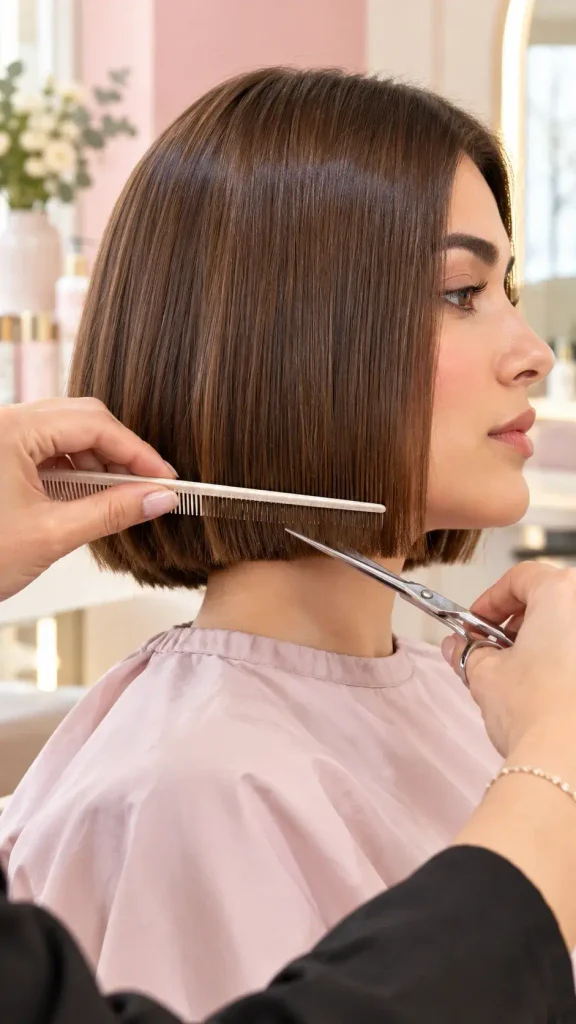
Bobs keep enough length to tuck, clip or curl, which makes them the gentlest way into short hairstyles for women. They run from the earlobe to just above the shoulders.
Blunt Chin-Length Bob
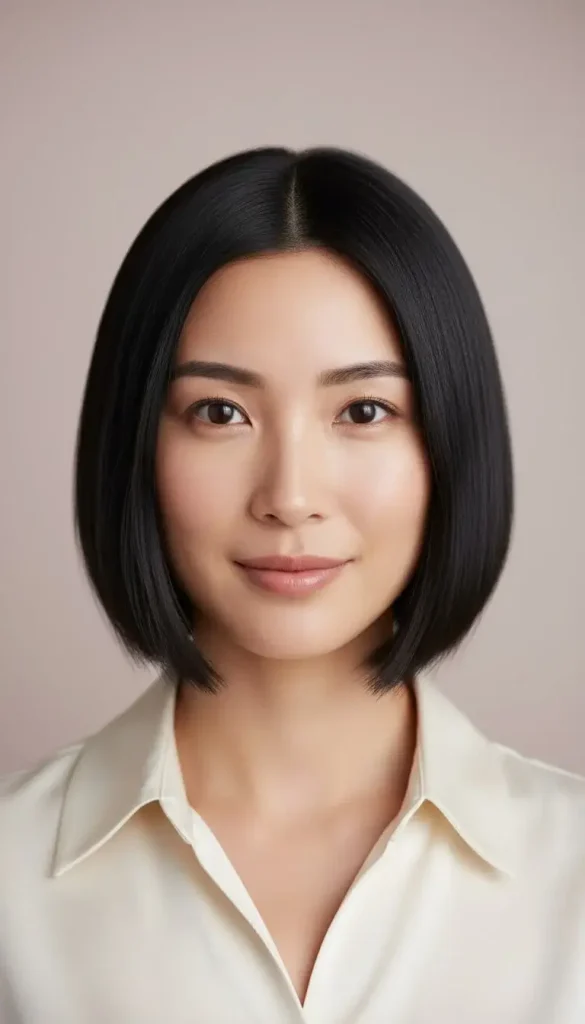
One length, one line. Because every strand ends in the same place, the edge looks dense. That is why stylists often suggest it for fine hair that looks see-through at longer lengths.
- Who it suits: Often flattering on oval, heart and long faces. With a round face, ending the cut about an inch below the chin usually looks softer than hitting the widest part of the cheeks.
- Hair texture: Fine to medium straight hair. Curly hair can spread into a triangle in a blunt cut unless it is cut dry.
- Styling difficulty: Moderate. The look depends on a smooth finish, so expect a quick blow-dry or a few passes with a flat iron.
- Maintenance: Every 6 to 8 weeks. The crisp line is the whole point.
- What to ask your stylist: “One length at my chin, blunt ends, no layers and no thinning shears.”
Layered Bob
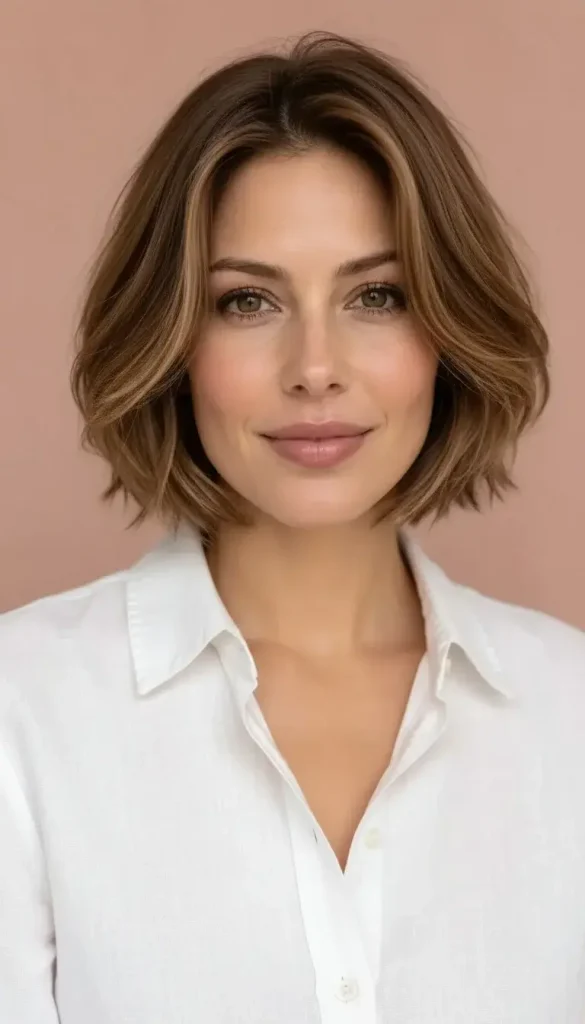
If your hair feels heavy or puffs out at the bottom, layers are the usual fix. They take bulk out of the middle, so the bob moves instead of sitting like a block.
- Who it suits: Round and square faces often benefit, because movement around the cheeks and jaw softens width. It is also a safe default if you are unsure of your face shape.
- Hair texture: Best on medium to thick hair. Fine hair can wear it with just a few long layers; too many and the ends thin out.
- Styling difficulty: Easy to moderate. Air-dry if your hair has natural wave, or use a round brush for bounce.
- Maintenance: Every 6 to 8 weeks.
- What to ask your stylist: “A jaw-length bob with long internal layers to remove bulk, not short choppy layers on top.”
French Bob with Bangs

Shorter than a classic bob and almost always worn with bangs. The appeal is the finish: a little messy, never too polished.
- Who it suits: It tends to suit oval and long faces, since bangs visually shorten the face. On a heart-shaped face, light wispy bangs usually sit better than a heavy fringe.
- Hair texture: Straight to wavy, fine to medium.
- Styling difficulty: The bob itself air-dries well. The bangs are the daily task, about two minutes with a blow-dryer and a small brush.
- Maintenance: Bangs every 3 to 4 weeks; the full cut every 6 to 8 weeks.
- What to ask your stylist: “A lip-length French bob with soft, textured ends and eyebrow-length bangs.”
Watch out: A strong cowlick at the front hairline can split straight bangs. Side-swept or curtain bangs are easier to live with.
Italian Bob
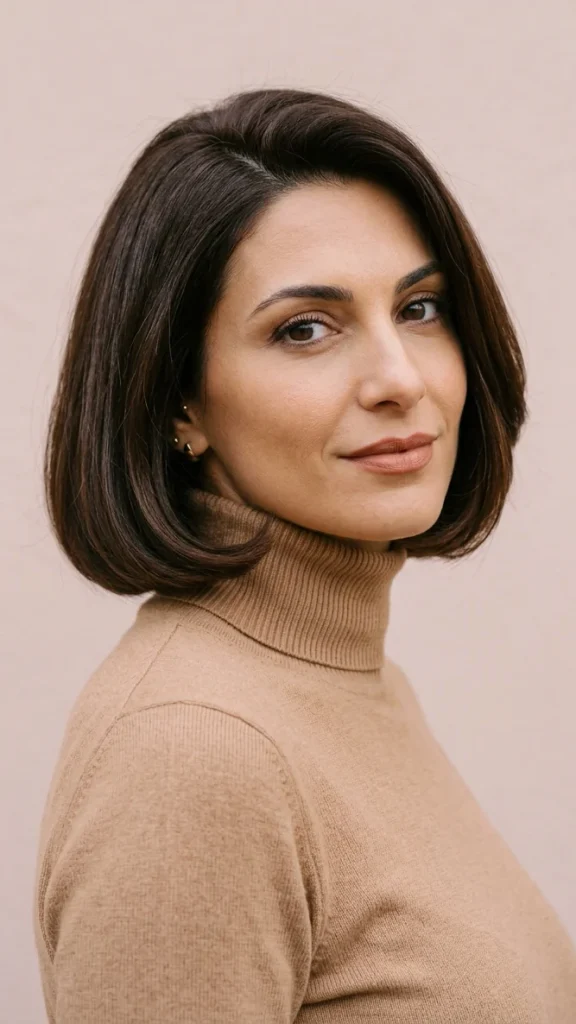
Where the French bob is short and undone, the Italian bob is longer and fuller. It sits at the jaw with rounded, bouncy ends. Think volume rather than texture.
- Who it suits: Often chosen for square and oval faces, because the rounded outline offsets an angular jaw.
- Hair texture: Medium to thick hair gives the fullness this cut relies on. Fine hair can get close with volumizing mousse and a round brush.
- Styling difficulty: Moderate. The bounce comes from a round-brush blow-dry of about 10 minutes.
- Maintenance: Every 6 to 8 weeks.
- What to ask your stylist: “A jaw-length bob with a heavy perimeter and rounded, slightly bevelled ends.”
Micro Bob
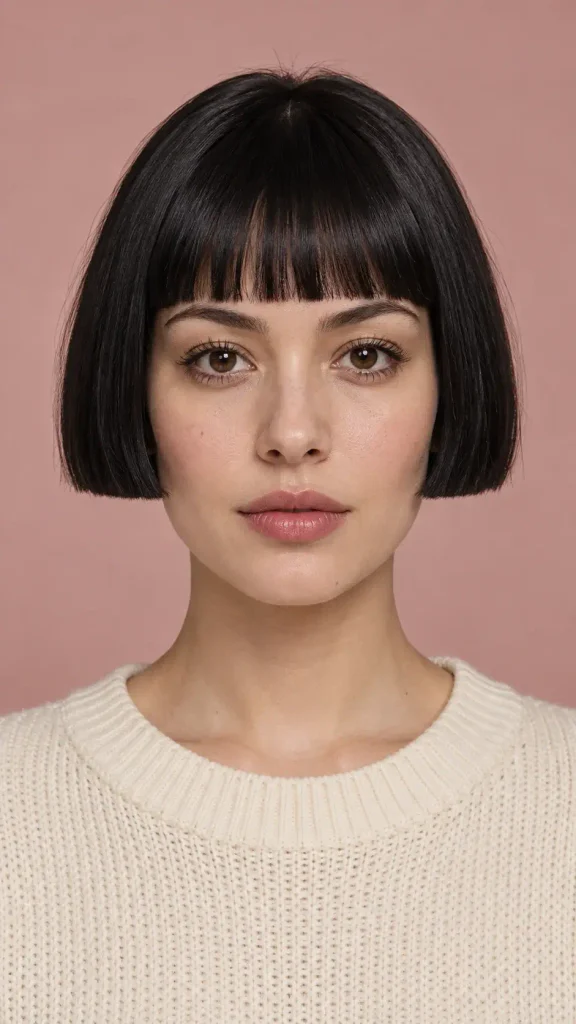
The shortest bob: one length at or just below the earlobe, all the way around. Unlike the pixie bob further down this list, the back is not tapered, so it keeps a solid, graphic line.
- Who it suits: Usually most striking on oval and heart faces with a defined jaw. It shows the whole jawline, so treat it as a statement cut.
- Hair texture: Straight, fine to medium hair holds the sharp line best.
- Styling difficulty: Moderate. It needs to be smooth.
- Maintenance: Every 4 to 6 weeks. Even half an inch of growth changes the look.
- What to ask your stylist: “A blunt one-length bob at my earlobe, including the back, with a clean straight line.”
Asymmetrical Bob
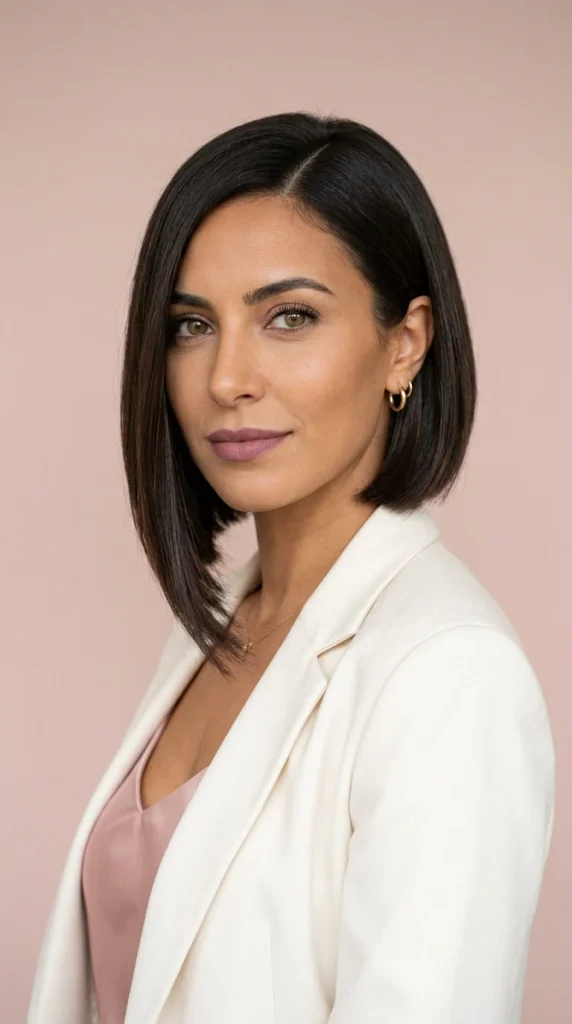
One side is cut longer than the other, usually the side you part on. The diagonal line adds edge without going very short.
- Who it suits: The diagonal can break up width, which makes it a popular pick for round and square faces.
- Hair texture: Straight hair shows the angle clearly. With waves, keep the difference in length small, or it can look accidental.
- Styling difficulty: Moderate. Smooth hair shows the line.
- Maintenance: Every 5 to 7 weeks, or the shorter side catches up.
- What to ask your stylist: “An asymmetrical bob, about two inches longer on my part side.”
Stacked Bob
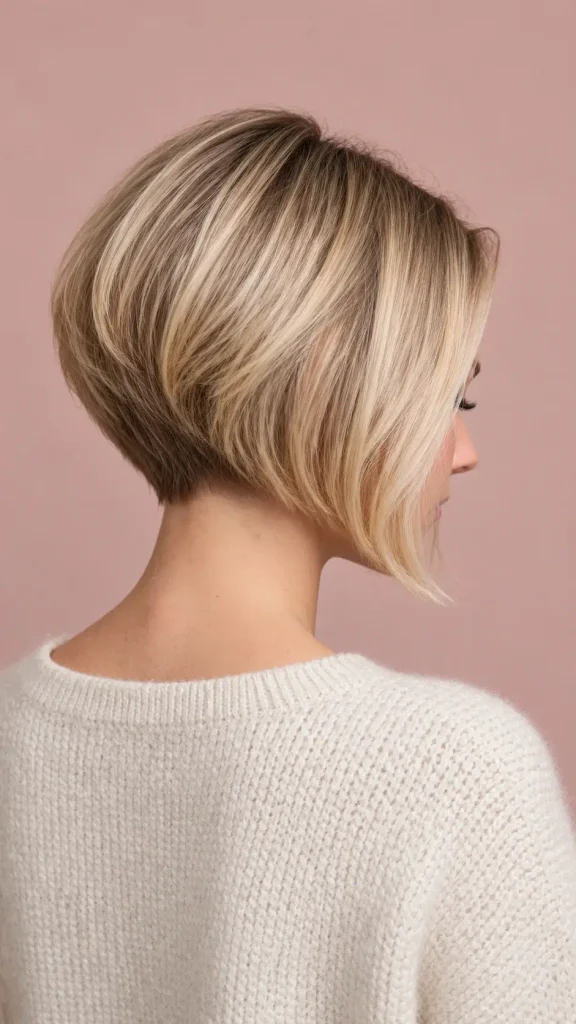
The interest is at the back. Short graduated layers at the nape push the hair above them upward, which creates height at the crown while the front stays longer.
- Who it suits: Crown height adds length to the face, so it often works for round and oval faces. Heart faces can wear it with moderate volume.
- Hair texture: Especially helpful for fine hair that lies flat at the crown.
- Styling difficulty: Moderate. Blow-dry the back upward with a small round brush.
- Maintenance: Every 5 to 6 weeks to keep the stacking neat.
- What to ask your stylist: “Graduated layers at the nape for crown volume, with chin-length pieces at the front.”
Curtain Bang Bob
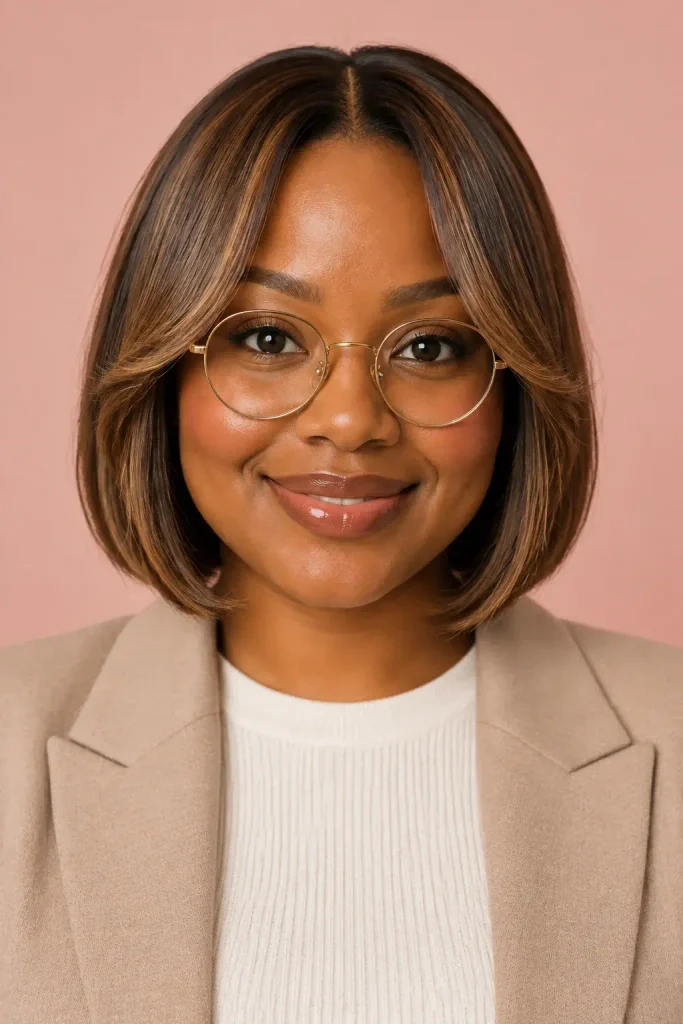
Curtain bangs part in the center and sweep out to the sides. They frame the face without covering the forehead, and they blend into the bob as they grow, so there is no awkward bang grow-out.
- Who it suits: One of the most adaptable options on the list. It is often recommended for long and square faces, and it softens a high forehead.
- Hair texture: Straight to wavy.
- Styling difficulty: Moderate. Blow-dry the bangs over a round brush, directing them away from your face.
- Maintenance: Bangs about every 4 weeks; the bob every 6 to 8 weeks.
- What to ask your stylist: “Cheekbone-length curtain bangs that blend into a jaw-length bob.”
Curly Bob
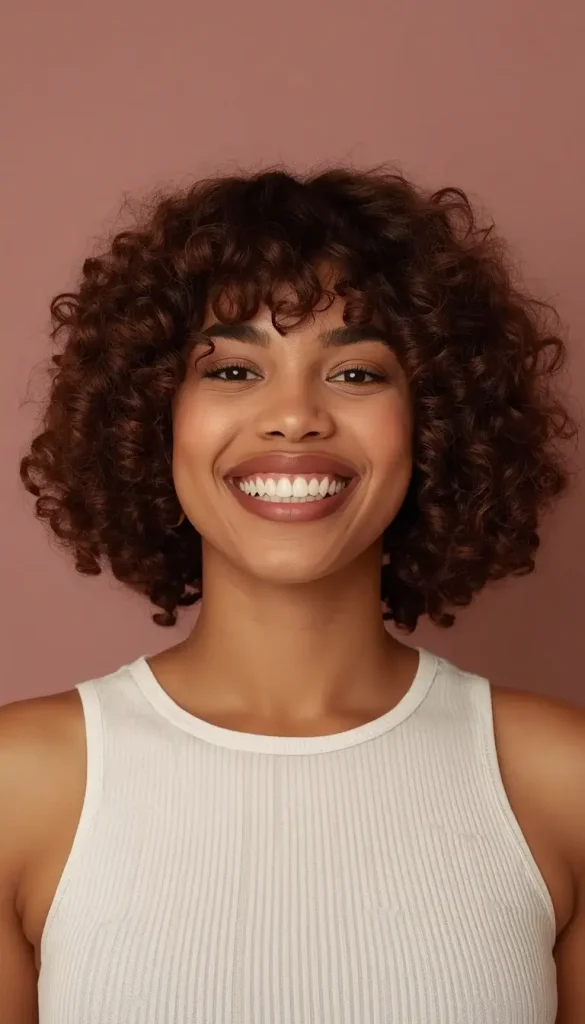
A curly bob is shaped around your curl pattern. Cut well, it forms a rounded outline. Cut like a straight bob, it tends to spread into a triangle.
- Who it suits: Because the width and length can be adjusted, it can be tailored to most face shapes. If you want to lengthen a round face, ask for more volume on top than at the sides.
- Hair texture: Wavy, curly and coily hair.
- Styling difficulty: Easy once the routine is set: leave-in conditioner or curl cream on wet hair, then diffuse or air-dry.
- Maintenance: Every 8 to 12 weeks. Curls hide growth well.
- What to ask your stylist: “A curly bob cut dry or curl by curl, rounded rather than triangular.” Look for a stylist who cuts curls regularly.
Tousled Wavy Bob

The longest cut on this list, ending just above the shoulders. Loose waves and long layers give it a relaxed, beachy finish, and it is the easiest bob to grow out.
- Who it suits: Waves draw attention away from the jawline, which is why many people with square and round faces favor it.
- Hair texture: Natural waves, or straight hair that holds a bend from a flat iron or large curling iron.
- Styling difficulty: Easy with natural waves: scrunch in mousse and air-dry. Around 10 minutes if you create the waves with heat.
- Maintenance: Every 8 to 10 weeks.
- What to ask your stylist: “A textured bob just above my shoulders with long layers to help the waves form.”
In-Between Cuts
Pixie Bob (Bixie)
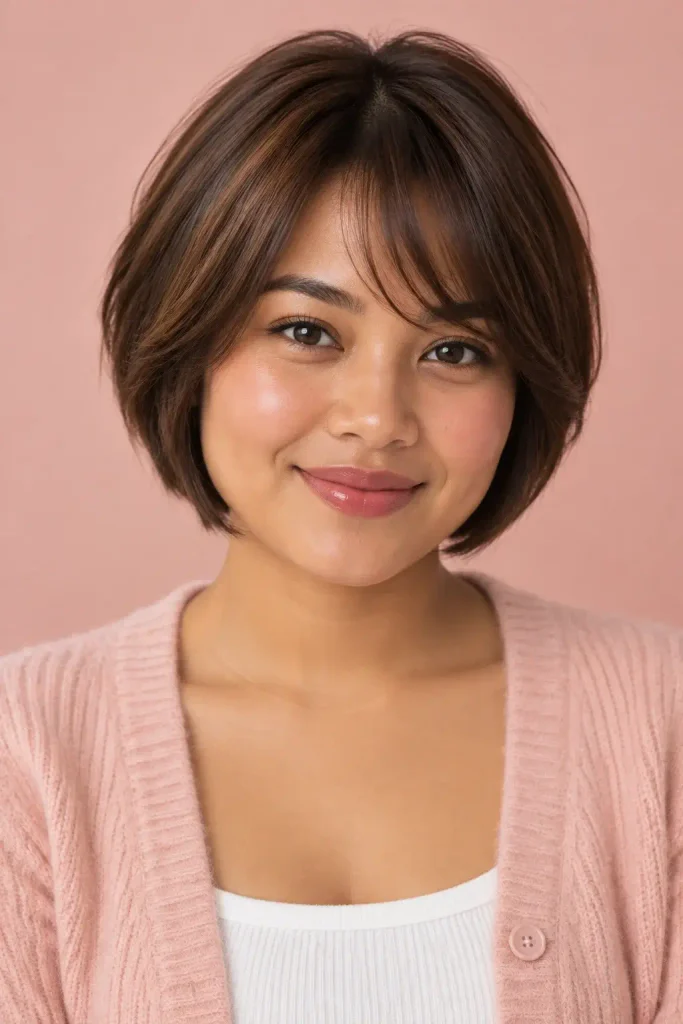
The pixie bob combines a pixie’s short, tapered back with a bob’s longer sides, which cover the ears and fall to about the jaw. That is the main difference from the long pixie, where the sides stay above the ears and the length sits on top.
- Who it suits: The ear-covering, jaw-length sides soften a strong jaw, so it often suits square, heart and oval faces.
- Hair texture: Straight to wavy, fine to medium density.
- Styling difficulty: Easy. Rough-dry with a little texture spray and push the front pieces forward.
- Maintenance: Every 5 to 7 weeks, or it drifts into a grown-out bob.
- What to ask your stylist: “A short tapered nape, sides long enough to cover my ears and reach about my jaw, and soft point-cut layers on top.”
Tip: If you have a cowlick at the crown, ask for a little extra length there. Cut too short, it stands straight up.
Short Shag
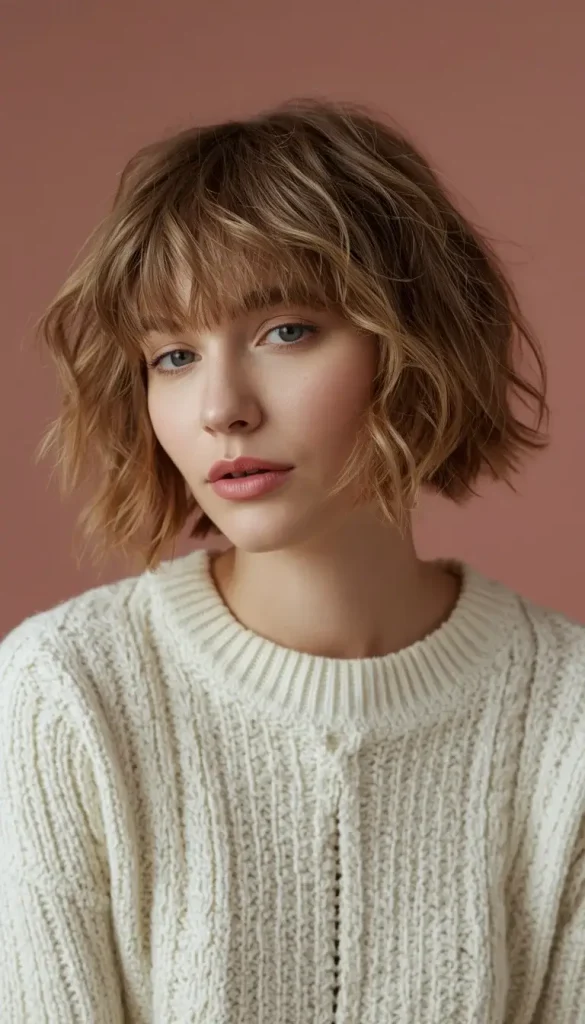
A shag is all about layers: lots of them, choppy and concentrated at the crown and around the face, usually with curtain bangs. The result is lived-in texture rather than polish.
- Who it suits: Layers around the cheeks add width, which can balance a long face. Oval and heart faces also tend to wear it well.
- Hair texture: Naturally wavy hair is ideal. Straight hair needs texture spray, and fine hair needs fewer, longer layers.
- Styling difficulty: Easy. Scrunch in mousse and air-dry or diffuse, about 5 minutes.
- Maintenance: Every 6 to 8 weeks.
- What to ask your stylist: “A chin-length shag with choppy layers at the crown and around my face, and curtain bangs that blend into the sides.”
Wedge Cut
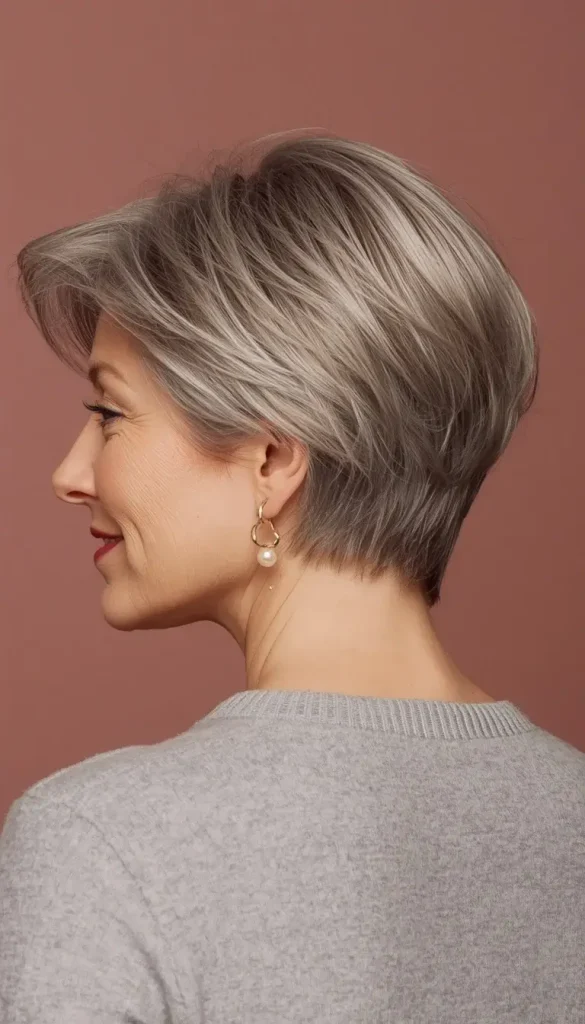
The wedge is tapered very short at the nape and builds into a rounded, full shape at the crown and sides. It is shorter than the stacked bob and has no longer front pieces. Many women choose it when their hair has become finer with age, because the shape holds volume on its own.
- Who it suits: The rounded top often suits oval, heart and round faces. Ask for closer sides if you want less width.
- Hair texture: Fine and thinning hair, including gray hair.
- Styling difficulty: Easy. A quick round-brush blow-dry gives lift in minutes.
- Maintenance: Every 5 to 7 weeks.
- What to ask your stylist: “A wedge with a tapered nape and rounded volume at the crown, with soft sides.”
Pixie Cuts and Short Crops
Among short hairstyles for women, pixies differ mainly in how much length sits on top and what happens at the sides. The comparison table after this list shows them side by side.
Long Pixie
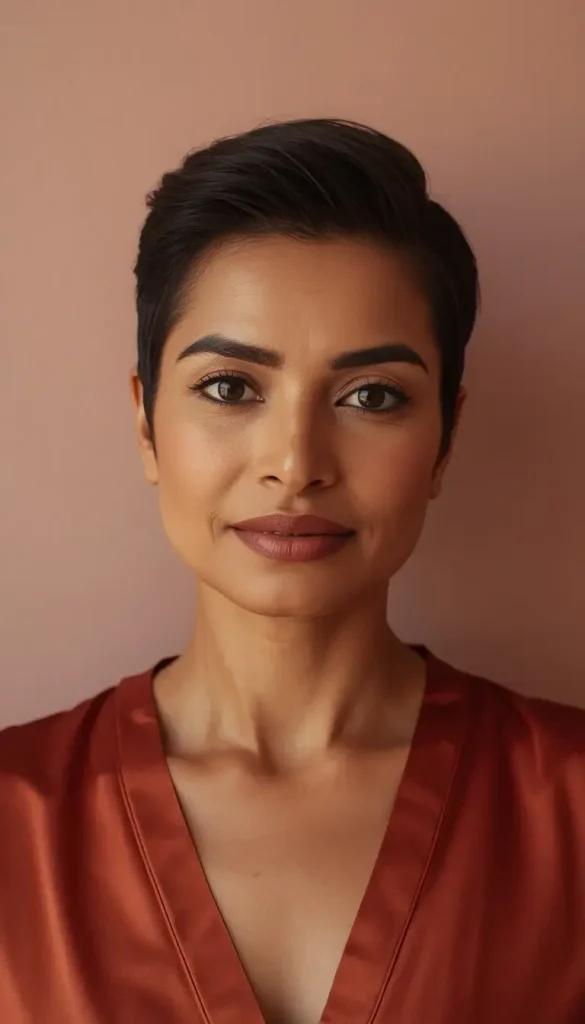
The long pixie keeps about four inches on top while the sides and back stay short. You can sweep it back, to the side or forward, which makes it the most versatile pixie.
- Who it suits: The top can be lifted for height, so it is often suggested for round faces. It adapts well to most other face shapes too.
- Hair texture: Any texture. Wavy hair gives natural movement on top.
- Styling difficulty: Easy to moderate, depending on how you wear it.
- Maintenance: Every 5 to 7 weeks.
- What to ask your stylist: “A long pixie with tapered sides above my ears, about four inches on top and a soft, blended nape.”
Grow-out path: This is the stage to aim for when growing out a shorter pixie. Keep the sides and nape tidy while the top gains length, then move into a pixie bob.
You may also like: 12 Pixie Cuts for Round Faces That Add Length
Classic Pixie
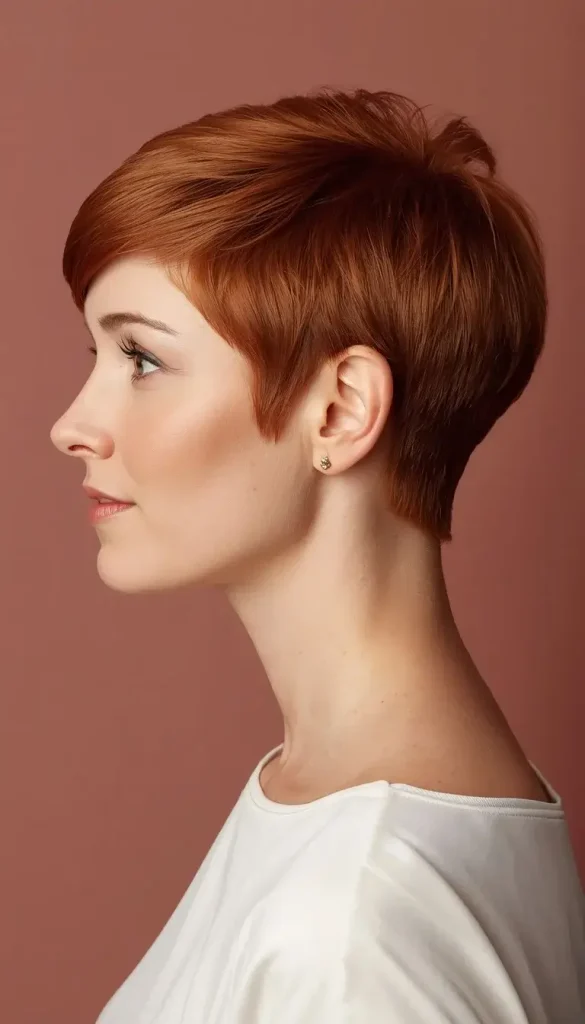
Shorter on top than the long pixie, with two to three inches of length, and neatly tapered everywhere else. It puts the focus on the eyes, cheekbones and neck.
- Who it suits: Often chosen by people with oval or heart faces, or with defined features they want to show.
- Hair texture: Fine to medium straight hair. Very thick hair can puff at the sides unless the stylist removes weight.
- Styling difficulty: Easy. A pea-sized amount of cream or paste.
- Maintenance: Frequent. Every 4 to 6 weeks, because pixies lose their shape fastest.
- What to ask your stylist: “A classic pixie with a tapered nape and sides, and two to three inches on top that I can sweep sideways.”
Side-Swept Pixie
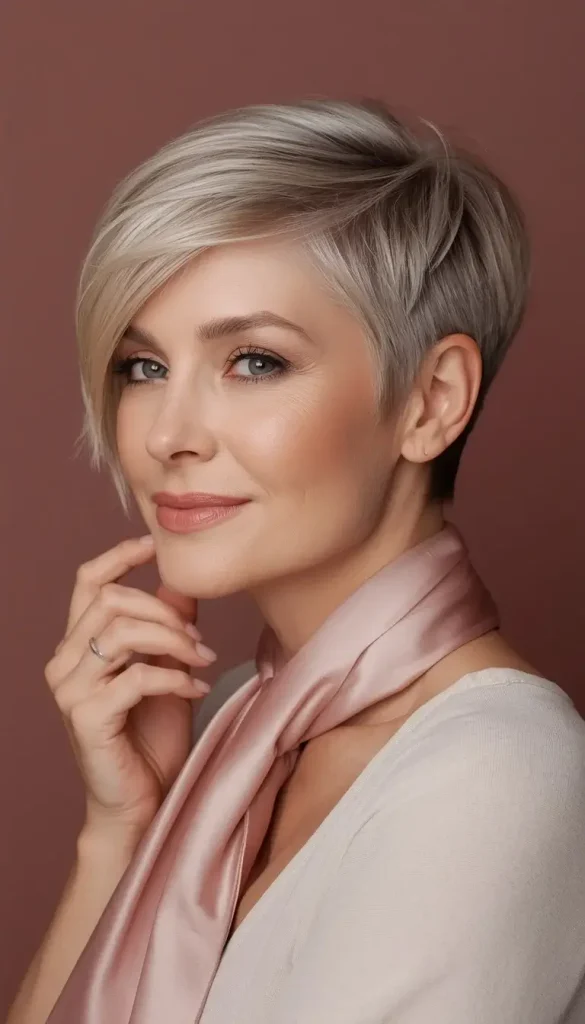
Think of it as a classic pixie with one long feature: a fringe that sweeps diagonally across the forehead to the cheekbone. It softens the cut and covers a high forehead.
- Who it suits: The diagonal line can break up width, so it is often favored by people with round, heart and square faces.
- Hair texture: Straight to slightly wavy, any density.
- Styling difficulty: Easy. Blow-dry the fringe in the direction you want it to fall while it is still wet; that sets it for the day.
- Maintenance: Every 4 to 6 weeks.
- What to ask your stylist: “A pixie with a long side-swept fringe that reaches my cheekbone.”
Good to know: The fringe can cover thinning at the temples, which makes this a common choice for that concern.
Textured Crop
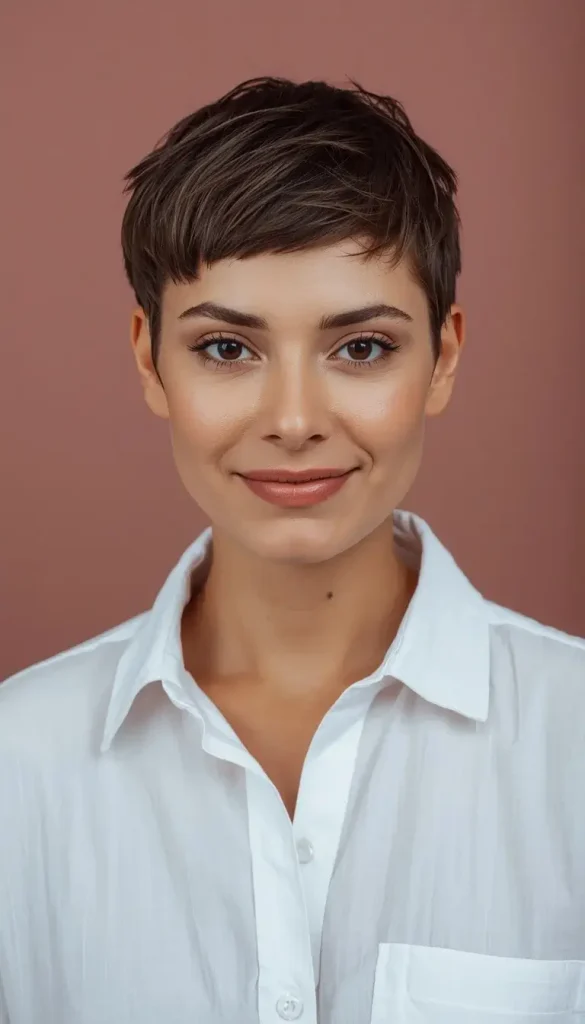
The shortest pixie that you can still style, and the roughest finish. Choppy pieces and a short fringe make it look intentionally undone, so there is no blow-dry to worry about.
- Who it suits: The short fringe can make a long face look shorter. It also suits oval faces.
- Hair texture: Straight or slightly wavy, fine to medium.
- Styling difficulty: Very easy. Work matte paste through dry hair with your fingertips, a minute or two.
- Maintenance: Every 4 to 6 weeks.
- What to ask your stylist: “A short crop with point-cut texture on top and a short, choppy fringe that looks good air-dried.”
Undercut Pixie
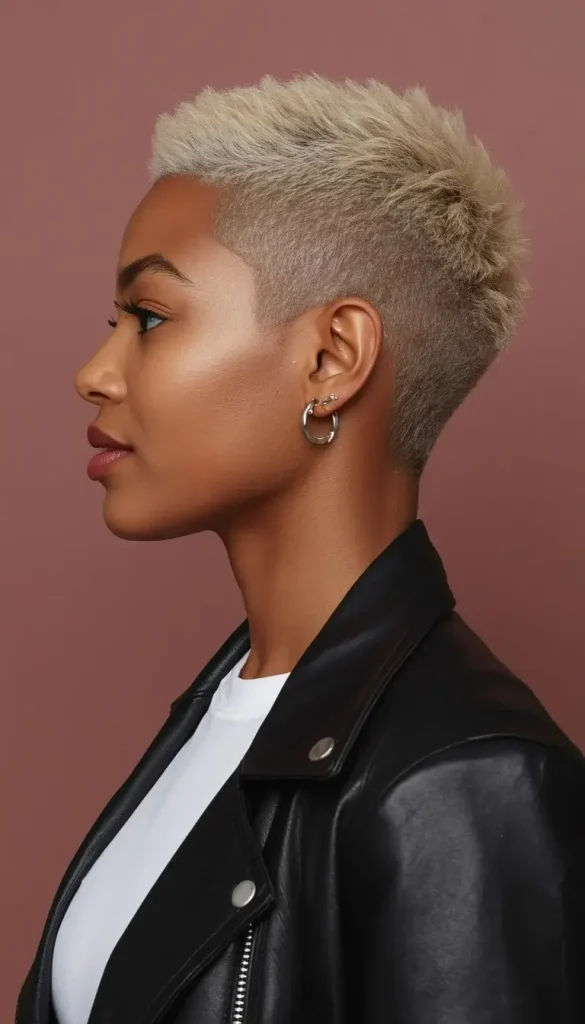
Clippered sides and nape with a longer top. Removing the weight underneath is what makes this pixie workable on very thick hair that would otherwise puff out.
- Who it suits: A bolder look, often worn with oval and long faces. The height on top can also help a round face.
- Hair texture: Thick hair benefits most.
- Styling difficulty: Easy. You only style the top.
- Maintenance: High. Clipped areas need a tidy-up every 3 to 4 weeks.
- What to ask your stylist: “Clip the sides and nape short with a guard, and leave three to four inches on top.” Bring a photo, because “short” means different things to different stylists.
Tapered Natural Cut
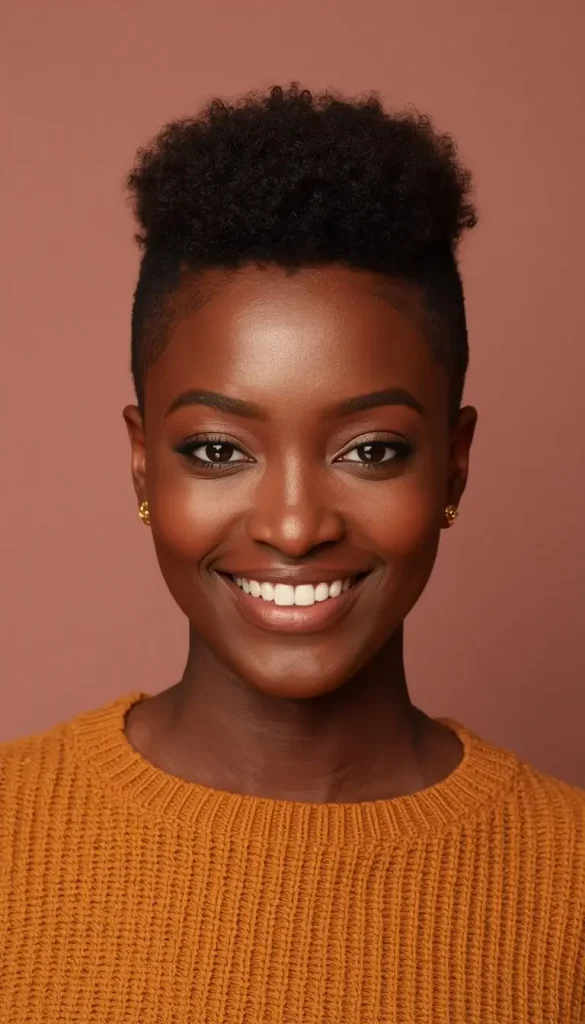
Shorter at the sides and back, fuller on top. On coily hair, the taper shapes the outline and makes wash day noticeably faster.
- Who it suits: Height on top lengthens the face, so it is often flattering on round, oval and heart faces.
- Hair texture: Coily hair (types 4A to 4C).
- Styling difficulty: Easy. Leave-in conditioner plus a defining cream or gel.
- Maintenance: Every 4 to 6 weeks to keep the taper sharp.
- What to ask your stylist: “A tapered cut with short sides and back, and my coils shaped fuller on top.” Choose a stylist experienced with natural hair.
Soft Buzz Cut
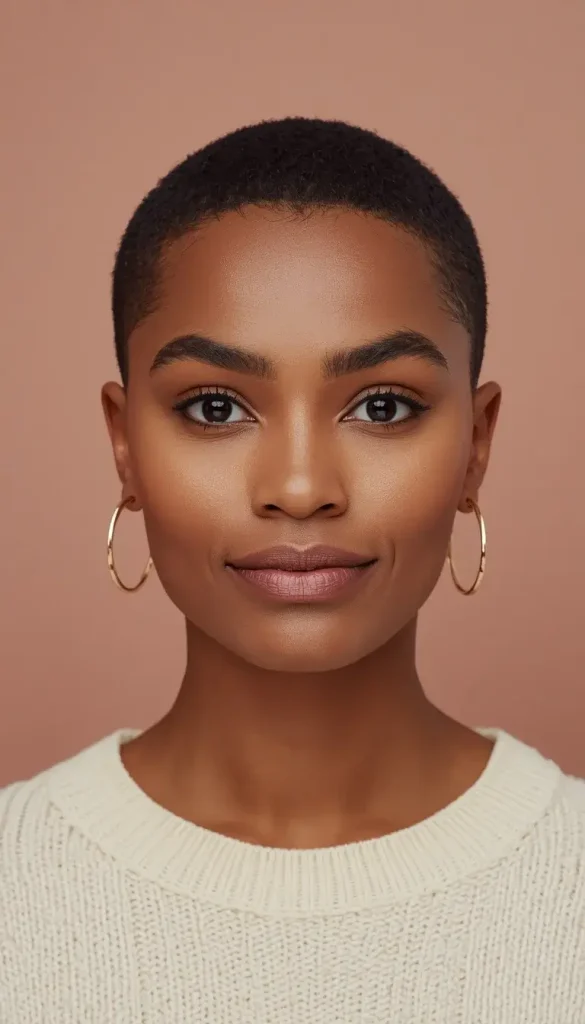
The shortest option here. A soft buzz leaves a little length so it is not scalp-close, and there is genuinely nothing to style.
- Who it suits: It puts all the focus on your features. People with oval or heart faces often choose it, but how you feel wearing it matters more than face shape here.
- Hair texture: Any texture.
- Styling difficulty: None.
- Maintenance: Clipper touch-ups every 2 to 4 weeks.
- What to ask your stylist: “An even clipper cut with a number 3 or 4 guard and a soft outline at the neck.” Wear SPF on your scalp outdoors.
Similar Cuts, Side by Side
Several cuts on this list sound alike. These tables show what actually separates them, so you can name the right one at the salon.
The pixie family
| Cut | Length on top | Sides | Back |
|---|---|---|---|
| Pixie bob | 2 to 3 inches, piecey | Cover the ears, to about the jaw | Short and tapered |
| Long pixie | About 4 inches | Above the ears | Short, softly blended |
| Classic pixie | 2 to 3 inches | Above the ears, ears visible | Short and tapered |
| Side-swept pixie | 2 to 3 inches plus a fringe to the cheekbone | Above the ears | Short and tapered |
| Textured crop | 1 to 2 inches, choppy | Very short | Very short |
| Undercut pixie | 3 to 4 inches | Clipped | Clipped |
The bob family, shortest to longest
| Cut | Where it ends | What makes it different |
|---|---|---|
| Micro bob | Earlobe, all the way around | Sharp one-length line, untapered back |
| French bob | Between cheekbone and lip | Bangs and an undone finish |
| Blunt bob | Chin | One length, no layers |
| Stacked bob | Chin at the front | Short graduated back, crown volume |
| Italian bob | Jaw | Full body, rounded ends |
| Layered bob | Jaw | Internal layers for movement |
| Curtain bang bob | Jaw | Middle-parted bangs to the cheekbones |
| Tousled wavy bob | Just above the shoulders | Long layers and loose waves |
How to Choose the Right Short Haircut
Work through three steps in this order. If they point in different directions, trust steps 1 and 2 over step 3: a cut that fights your hair every morning rarely flatters anyone for long.
Step 1: Decide how long you will really spend styling
- Under 5 minutes: textured crop, soft buzz cut, classic pixie, undercut pixie, pixie bob, curly bob, short shag, tapered natural cut, tousled wavy bob (with natural waves)
- 5 to 10 minutes: long pixie, side-swept pixie, wedge, layered bob, stacked bob, French bob with bangs, curtain bang bob
- 10 minutes or more, or you enjoy a polished finish: blunt bob, Italian bob, micro bob, asymmetrical bob, tousled wavy bob (with heat styling)
Step 2: Narrow it down by hair texture
| Your hair | Start with | Be cautious with |
|---|---|---|
| Fine, straight | Blunt bob, micro bob, stacked bob, wedge, pixie bob | Lots of short layers, heavy shags |
| Thick, straight | Layered bob, Italian bob, undercut pixie, short shag | One-length bobs with no weight removed |
| Wavy | Tousled wavy bob, short shag, curtain bang bob, long pixie | Very sharp one-length lines |
| Curly or coily | Curly bob, short shag, tapered natural cut | Blunt cuts cut on wet hair |
Step 3: Fine-tune for your face shape
Use this as a conversation starter with your stylist, not a list of rules.
| Face shape | Often flattering | Worth discussing first |
|---|---|---|
| Round | Long pixie, side-swept pixie, asymmetrical bob, stacked bob | A bob ending right at the widest part of the cheeks |
| Square | Layered bob, curtain bang bob, tousled wavy bob, Italian bob | Blunt lines that end exactly at the jaw |
| Heart | Pixie bob, French bob with wispy bangs, side-swept pixie, curly bob | A lot of volume at the crown |
| Long | French bob with bangs, short shag, textured crop | Height on top with flat sides |
| Oval | Most cuts on this list | Few limits; choose by texture and time |
Not sure of your face shape? Pull your hair back, trace your outline on a mirror with a lipstick or dry-erase marker, and compare the widest points: forehead, cheekbones or jaw. Many faces are a mix of two shapes, which is another reason to treat the table loosely.
Which Styles Work for Fine or Thick Hair
Fine hair: Shapes with a strong outline usually look fullest, such as the blunt bob, micro bob, stacked bob and wedge. Lots of short layers can make fine ends look sparse. A little lift at the crown often makes more difference than the cut itself.
Thick hair: Cuts that remove weight tend to sit better, such as the layered bob, undercut pixie, short shag and Italian bob. Ask your stylist to take bulk out from inside the haircut, so the outline stays soft instead of puffy.
Curly and coily hair: The curly bob, short shag and tapered natural cut are good starting points. Find a stylist who cuts curls regularly, because curls shrink as they dry and a cut that looks right wet can end up much shorter.
You may also like: 15 Bob Haircuts for Thin Hair That Look Fuller
Maintenance Tips for Short Hair
- Book your next trim before you leave the salon. Most short cuts start losing their shape somewhere between 4 and 8 weeks.
- Use less product than you think. A pea-sized amount of paste or cream is usually enough for short hair. More tends to look greasy.
- Sleep on satin or silk. Less friction means less flattening and fewer surprise cowlicks in the morning.
- Keep dry shampoo nearby. Short hair shows oil faster, especially at the fringe.
- Refresh color along with the cut. Short hair shows faded or brassy ends quickly, so a gloss at your trim appointment keeps color looking fresh.
- Plan the grow-out early. If you might grow your hair later, tell your stylist. They can shape each trim toward the next length so you skip the most awkward stage.
FAQ
Which short hairstyles for women are easiest to grow out?
The tousled wavy bob, curtain bang bob and long pixie usually grow out most gracefully, because they have no sharp lines. Micro bobs and undercut pixies go through a more noticeable awkward stage.
What is the difference between a pixie bob and a long pixie?
A pixie bob has longer sides that cover the ears. A long pixie keeps the sides short, above the ears, and puts the length on top.
What is the most low-maintenance short haircut?
For daily styling, a soft buzz cut or textured crop. For fewer salon visits, a curly bob or tousled wavy bob, because texture hides growth.
Will short hair make my face look rounder?
It depends on the shape more than the length. Cuts with height, a side part or an angle, such as the long pixie, side-swept pixie and asymmetrical bob, tend to lengthen a round face.
Is short hair good for fine or thinning hair?
Often yes. Less length means less weight pulling the roots flat, so hair can look fuller. Blunt and stacked shapes are good places to start.
How do I avoid regretting a short haircut?
Go shorter in two steps. Try a bob or pixie bob first, live with it for a month, then go shorter if you like it. Bring photos of the cut on people whose hair is similar to yours.
Final Thoughts
The best of these short hairstyles for women is the one that fits your hair and your mornings, not just the photo. Use the three steps above to narrow the list to two or three cuts, save those photos, and take the “what to ask” line to your stylist. If two cuts on the list sound similar, check the comparison tables and use the exact name. That small detail often makes the difference between the cut you pictured and the one you get.